You don’t need to read this post

Really. You don’t.

“Don’t miss the sunset! 9:28 PM”

So said my weather app the other day, and I spiraled into a cynical frenzy.

Here’s the thing, damn it. I am so busy. I can’t add the sunset on top of it all.

And actually, I can, and the sunset would be maybe the best thing to add on top of it all.

But weather app. Why are you trying to sell me on the sunset? When did this become a thing?

More. Why the hell are you preying on my Fear Of Missing Out to convince me to watch the sunset.

I think . . . I just think . . . it may have something to do with the fact that if I feel like I’m missing something if I don’t stay in touch daily with my weather app, then I may click on it more, and it may make more money.

And this is how we all got burnt out.

“This ‘Face-Lift In a Bottle’ Sold Out At Target” (on Yahoo! News).

“William and Kate Party on With 1,700 Guests at Royal Wedding of the Year” (MSN).

“Biden falls at graduation, but gets back up and finishes ceremony” (MSN).

“Belgian town organizes seagull imitation championship” (Reuters). Okay, no that one can stay.

Once upon a time, you missed almost everything that happened in the world. And you were probably a lot mentally healthier and less exhausted for it. There were disadvantages to this arrangement–like lots of powerful people could do lots of bad things all around the world and nobody would know or care. Now at least we know and care for a few days.

And most of the great things you need to do or get or try or know right now, you’d never do or get or try or know, and gosh life was a lot happier.

But now absolutely everything is at your fingertips, screaming at you when your alarm goes off and your groggy hands reach for your phone. You need it all! And it’s exhausting.

Everything is too good to miss, too funny to miss, too life-changing to miss, too good a deal to miss, too shocking to miss.

And every single 24 hour day, you fail at keeping up with it all. And that’s bad. You’re bad. You could be better. If only you clicked this, bought that, tried this, knew that.

But it’s just not possible.

A thousand “You can’t miss this” things are fighting over your exhausted attention every day, and every day, they win and you lose.

You will never have it all, know it all, see it all, understand it all, care about it all, try it all, or keep up with it all.

It’s really going to be okay if you don’t know about that Face-Lift in a Bottle that sold out at Target.

And it’s really okay if you miss the sunset tonight.

Although come to think of it, it still would have been there had the weather app not made you feel Shouldy about it.

~

I usually put a subscribe button down here. Not today. You literally are going to be fine if you miss what I write. Wishing you peace and intrinsic enoughness. <3

~

We made that up

How are you doing? Are you exhausted? Like deep in your soul, exhausted?

I have some thoughts.

We made up that you have to text someone back.

We made up that you’re supposed to be positive all the time.

We made up that you’re supposed to eat three meals a day.

We made up that you need your own home.

We made up that people are better if they have lots of friends.

We made up shoes.

We made up that you keep your parents’ last name–and not even across the whole world.

We made up school and debt and school debt.

We made up that you should part your hair down the side. Then we made up that you should part your hair down the middle, and that if you part your hair down the side, you’re not with the times.

We made up that you should strive for career success. We thought we made up what success even means, but nobody seems to agree or be happy when they get there.

We made up that you’re boring if you don’t like going out.

We made up that you’re supposed to play it cool when you finally meet someone you have a crush on.

We made up that feeling sexual interest in others means you love your life person any less.

We made up that sexuality has to be strictly organized in an arbitrary way, and oh my goodness are we taking a long time to unmake that up.

We made up that you’re supposed to have a life person.

We made up that you’re supposed to work 40 hours a week.

We made up “boss.”

We made up multi-level marketing and product parties. We also made up corporations and weirdly pyramidy looking corporate pay structures. Either way, a lot of us are struggling.

We made up that kids need to excel in academics.

We made up that it’s vitally important that you show up not a moment late to your daily shift.

We made up that you should tough it out when you’re feeling like you’re breaking down.

We made up that you’re supposed to save hand-holding for your sexual partner.

We made up that girls wear makeup and boys don’t.

We made up the words for girls and boys and we made up how important those words were.

We made up that women are better parents and care-takers.

We made up that men are tougher and stronger and more apt to lead.

We made up that when you order the big ass Denver omelet, you should say “we’re going to volleyball tonight,” instead of “god I love food.” I did this yesterday, and I didn’t even play.

We made up that buttons on your shirt means you respect the people you’re talking to. Or a long strap of silk and polyester choked around your neck.

We made up that robes or bare feet are weird.

We made up that natural hair on your face or your armpits or your privates is anything besides “there.”

We made up the word “privates” so that genitals could be saved for shamey conversations and for powerful men to control in private.

We made up that you’re supposed to respond graciously when old men talk to you in a way that makes you feel yucky.

We made up that it’s somehow on you when you are hurt by people.

We made up that when you’ve been hurt, you have to forgive.

We made up that forgiveness looks like reconciliation.

We made up that family is for life.

We made up so many damn things about the word “family.”

We made up that it’s okay for people to bully, manipulate, abuse, and take advantage of you, as long as they’re related by blood. We refuse to admit we made that up, but we did and we’re shockingly loyal to it.

We made up that you owe anyone an explanation.

We made up that extroverted is better. And then we learned from some really thoughtful psychologists that that’s not true, so we make all sorts of posts about how awesome introverted is. But we still lowkey judge introverts.

We made up that it’s weird to sleep in a tent in your backyard.

We made up that sleepovers are only for kids.

We made up that kids have to grow up and leave kid stuff behind.

We made up stuffed animals, and this was a good invention that provides so much comfort, and then somewhere between the ages of “7” and “you’re not a child anymore,” we tell people they no longer need comfort.

We made up that you have to be good at dancing to feel confident doing it, and we enforce it by laughing and making fun and sharing videos online.

We made up that everyone gets roads but not everyone gets medicine.

We made up that you should go to college.

We made up that you need to have a clear life and career plan.

We made up that you will be happier if more people think you’re really awesome.

We made up that people think you’re really awesome if they pay attention to you online.

We made up that it’s childish to try to get attention.

We made up that saying things to the people in your life like “Hey I just need some attention right now!” is needy or obnoxious.

We made up that needy is obnoxious.

We made up that crying in front of people isn’t a thing to do.

We made up that you shouldn’t live in the woods.

We made up relationships.

We made up workplace structures.

We made up work.

We made up money.

We made up goals.

We made up purpose.

So if some of what we have made up isn’t quite working for you, that’s understandable. There’s a lot of it. It would be weird if you matched it all, and honestly the world would be pretty boring.

Which bits don’t work for you? And what will you make up for yourself instead?

Sending love and courage to be weirdly, honestly, colorfully you.

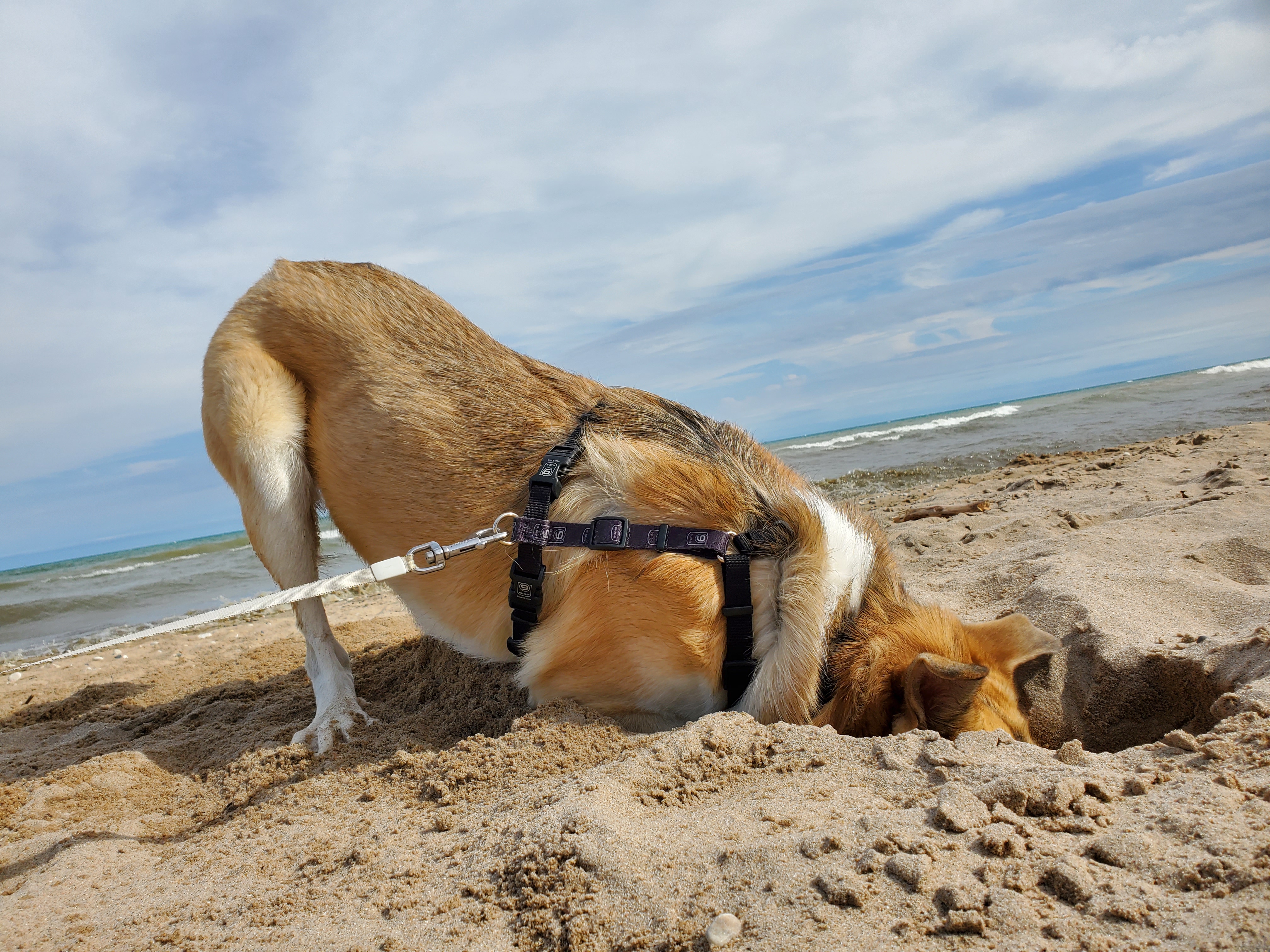
PS – We made up that dirt is dirty and that sand is messy and that messy isn’t the best thing in the world. But Junko knows better. I learn a lot from her.

~

How about you and I help each other stay off track? I’ll send you sparks of weirdness. <3

Roots

What are your roots?

And who told you?

Therapy homework one year consisted of writing the letter to my parents that I’d probably never send but always needed to write. At the time, the words gushed like a fresh wound–thousands and thousands and I never even reached the end. At the time, reading what I wrote and sharing bits and pieces became a cathartic therapy for me. It felt a bit like watching the wound scab over. Last week–and I don’t remember why–I pulled the letter up again. This time it felt strangely foreign. Oh I remember every second, but it’s not . . . I just don’t . . . need to remember anymore? It feels a little gratuitous now?

If I decide to go back, I can remember the odd and dizzying experience of trying to find my footing as a 20-year-old in a reality very different than the one I grew up in. Slowly dicing onions with shaking hands, I would contribute some thought to the chatter, something I thought sounded normal, and the whole Chipotle crew would fall silent and turn to look at me a little too curiously. Like I was from a different planet. We’d open the doors to a stream of normal people on their normal lunch breaks, and as I looked down and fidgeted with the tortilla press I would deliver the tense line, “What can I get for you?” over and over until Max stepped in with some brotherly taunting to teach me how to speak terrifyingly confident greetings, like “Well hey there, what brings you in today?!” My shoulders tightened progressively through the day until I ended my shift with a splitting headache and found myself back in bed crying over how completely lost I was.

Memories like these once served a useful purpose in fortifying my rejection of the world I had known where there were no crowds of normal people and I wasn’t allowed to get a job and rarely allowed to go to a friends’ house. The memories helped me prove to others (really so that I could prove to myself) that my childhood had been dysfunctional, that it was a culty experience that left me helpless in the outside world, and that I was right to get out when I could.

But now the memories feel, as I said, a little gratuitous. Like re-watching a bloody surgery I don’t need to re-watch. Reading my letter with its story after story of weird abuse doesn’t seem therapeutic anymore, at least for now. That time of uprooting is done.

We all come with confusing stories about who we are, why we are, where we must be headed, and what is even going on in this strange world. Many of these stories we’ve accepted from others, and they can feel set in stone. The stories speak of values deeply ingrained by our families, or by our cultures large and small. Values we rarely stop to question. Assumptions rooted deep within our psyches. Truths rooted deep within our bodies.

And then when things hit just enough of a chaos point, just enough dissonance and impossibility, just enough crashing and burning–we sometimes get to see that these roots may have been quite arbitrary, and realize it’s time to dig ourselves out.

So we uproot and replant. Or uproot and be blown around a lot and maybe never replant. Life can be hard and is different for each of us.

Uprooting, by the way, is not always a choice and is rarely pleasant. It takes courage and it usually means having hit a low point. So when you see someone uprooted–whether they’re still blowing in the wind or have found different soil–remember compassion.

So what were you told were your roots? Were they really roots for you? And are they still? And do they have to be? And are they allowing you to grow beautifully? Or are they stifling and starving you?

When I wake up in the middle of the night and, with the willpower of a person half asleep and half needing a distraction from the high pollen count, find myself scrolling from Kyiv bombings to missiles in the Korean peninsula to a senator swearing assault rifle regulation is off the table to a rich bully threatening the employees who make him his money to a major news outlet reporting on a major celebrity stating the least sexy thing a guy can do is fart to a money guru tweeting in all caps about the economy crashing and how you need to buy silver . . . it makes me wonder where my roots are?

I think a lot of us these days are finding ourselves tangled in news feeds. Somehow supposed to digest a thousand threats and crises and scandals and tragedies and offenses during an afternoon on the couch. Until we’re left with no willpower and little imagination and just a fizzle of who we were somewhere deep inside, sputtering a little weaker each day.

And then there are those who have a firm foundation from which to accuse and judge and know. Simple arguments and convenient theories and too much confidence and too narrow a window on the world. Some of us live with unquestioned roots that explain everything for us so that we’re not lost and anxious and we know exactly how it will all turn out. Until something drags us down into the street and exposes just how full our society is of things we don’t know, don’t understand, and wish we hadn’t seen, but can’t unsee.

In my experience, the logic-y, dogma-ish roots are too dry and inflexible and they tend to snap when life gets stormy enough. Which may be why despite hundreds of millions of people who are pretty sure they know what’s up, our society seems to blindly stumble from year to year, blaming and blaming and never quite fixing.

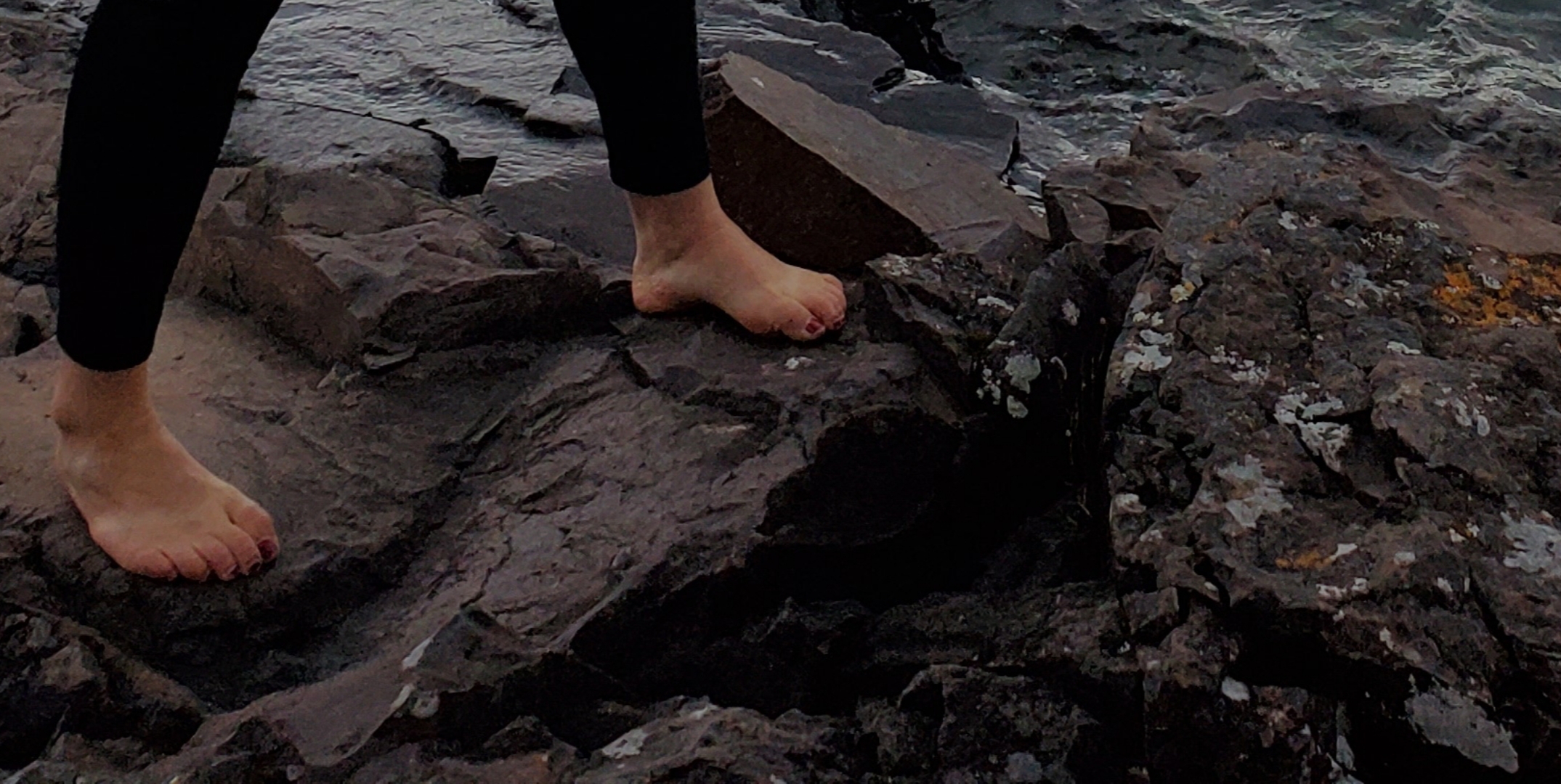
And if you also find yourself sleepless some nights, I wonder how your body itself may support you with its own roots in those worried moments. When all the reasons and plans and budgets and jobs and rules and structures and explanations aren’t working for you, maybe your breath will still sustain you like it always has, and your feet will find they’re still rooted to the ground, and you’re still alive, and you’re still here, and you can still touch and taste and see and hear and feel and laugh and cry and hug and dance and sing and do the body things that don’t require a credit score or a stock exchange.

Your feet can’t tell you why the world is the way it is today. Your hands can’t tell you where we’re headed. Your breath can’t change the trajectory of humanity–except that it can calm and center you and that a bunch of you’s make up humanity and that maybe if we all stopped to breathe calmly our trajectory may change. You, though, in your body, right now, can’t solve it all. But I think it’s your chaotic, scrolling brain that is insisting you find all the solutions–not your body. I think your body is just waiting for you to drop in and find the same aliveness and ease that you did as a running and pushing and swinging and bouncing and singing child, before you joined the world of the adults who have to know it all.

Today, your feet and your hands and your belly and your lungs and your movement and your stillness and your ears and your eyes and even your nose and your mouth can be your roots to a different kind of place, a different state. Not one of fixing or judgment or worry or need. One of aliveness, of being. And with those roots you may find some rest and peace.

And while the world needs you to come back to the work from time to time, when you find yourself blowing in the wind I wish you the courage to let the wind blow around you as you feel the ground with your feet and enjoy being a body.

~

Let’s find roots together as we go? Email address below. <3

But is it REALLY okay?

#makeitok is a hashtag for those of us who want to end the stigma around mental illness. For those of us who want talking about and attending to mental health to be a normal, accepted, an “ok” part of life.

In the last few years I’ve been really impressed by the differences in the shapes and sizes of the bodies in advertising. Even cellulite is allowed now, officially.

All kinds of things that were once sort of taboo to talk about, or seen as disappointing or embarrassing, have become very widely accepted and even celebrated.

You are you, and that is okay.

That is our official policy.

And we will even design some advertising around it.

And post on Instagram about it.

. . .

I don’t actually think this is all posturing. I actually feel really hopeful about all this change.

But I do wonder, if we’re being honest–is this stuff that we’re saying is okay–is it really okay? Are we standing behind that declaration? Or are we just saying it?

Like, yes, we know deep down that each human is on their own colorful journey, that everyone will have their own struggles or their own characteristics, and that we want to be very accepting . . .

But what about the comments or conversations that don’t go on Instagram?

What about the accidental messages that are sent when the two or three heavier people in the workout class get left on the outside of the cliques?

What are people internalizing when the assumptive goals and programs the gym offers always start with something about losing weight, looking better?

Or what about when we create these communities where we hold “mental health” events and keep saying stuff like “anxiety is normal” or “it’s okay to struggle,” but then . . . you don’t actually witness anyone feeling the safety to raise their hands and say, “hey guys, I’m actually falling apart now, like in real-time, I think I need some help.” . . . ?

I live with a good amount of anxiety, and I’ll tell you what, it is not a walk in the park for my best friend who shows up for me in the anxiousest moments (you’re welcome dictionary). Anxious energy, depressed energy–it can be really difficult to be around. Your anxious friend may be on the lookout for reasons to label you a threat. Your depressed friend may not seem to appreciate you and all the love you’re showering on them, because today they literally can’t appreciate anything. And that is not easy to sit with, as the person showing up, “making it okay.”

It’s so easy–even trendy–to say “We all struggle with mental health sometimes, it’s okay that you do, too!” It feels good for a minute to raise our hands and say “Yeah, I actually have anxiety, too” and then to have a bunch of people nod their heads and say “Mmmm! Thanks for sharing!”

And these aren’t bad things. These are step 1. Step 1 used to be taboo. But step 1 has become the norm. A trend. We made it okay to at least SAY that it’s all okay.

. . .

I can’t recall in which book or talk or maybe podcast, but I heard one of my favorite authors, Jon Kabat-Zinn (who helped popularize meditation and other eastern practices and ideas in the western world) express some concern over the trendiness of yoga: It’s fantastic that it’s more accepted and accessible now, but as the west becomes drenched in yoga classes and yoga workouts–are we losing some of the deep, life-changing principles that have been at yoga’s core for centuries?

In other words: Everyone “does yoga” now. But . . . how much depth in yoga traditions is being forgotten or neglected?

It’s an unfortunate side effect of trends–one that maybe we can work to mitigate: The popularization of good, true, loving principles is wonderful, but the more popular the message, the easier it is to posture, to put on a show, but to go no further than lip service.

When that happens in areas where people have felt left out or ashamed–personality, interests, sexual identity, poverty, mental illness, weight and body-type, race or ethnicity, abilities . . . the list of reasons society through history has given people to feel inferior is endless–when the posturing of acceptance and inclusivity happen in areas where people have felt left out or ashamed, it can do a lot of damage.

We’ll get to that more, I promise.

. . .

So–we checked off step 1. As a society, we’re officially kind and accepting of all kinds of bodies, all kinds of minds, all kinds of all kinds.

Officially.

. . .

When was the last time someone got really raw and real with you about how they’re struggling–in this moment–let you see and hear and feel their struggle?

Were you able to make it safe for them? No matter how heavy that energy was? Or how panicky? Were you able to prove to them that they’re okay for being them, even with the raw mental health struggles?

And when you post to Instagram about how as a personal trainer you believe in the okay-ness of every different shape and size, and a new client shows up feeling relieved and hopeful now that they’ve found personal training with no shame–what expectations do you actually set with them? What messages do you give them? Do you encourage them to love and accept their right-now body? Do you talk about sets and reps like they’re punishments or the price to pay for the way they eat? Or assume they’re here for a “lifestyle change?”

Or how about as a gym owner or manager that publicly champions healthy body image, claims credit for saying “all shapes and sizes are welcome here,” and that body-sculpting isn’t the only acceptable goal for gym-goers–who are you hiring as trainers and staff? And what pressure are you putting on them to “look the part” by getting lean and toned and badass? And what comments are you making about them when you don’t think they’ll hear? And do all the special programs and challenges you offer seem to say, at their core, “You should look better”?

Okay, so we all do this. We say “I’m a good person.” “I don’t bully.” “I don’t make fun of people.” “I accept everyone.” But in some realm, some way, some context–I think we’ve all got some work to do to make this “okay” stuff ACTUALLY okay.

It’s like when a big corporate company proudly publicizes their strong commitment to inclusivity–all races and ethnicities, all differences in ability, all ages . . . but then you look inside the company and you can’t find BIPOC team members or leaders, you can’t find anyone with a disability, and it seems like older people who can’t keep up quite as easily with the new and the young are always the ones whose positions get coincidentally eliminated.

. . .

We’ve taken step 1 as a society.

We accept all kinds of differences–even ones that by definition include some extra care, like differing physical abilities or like mental illnesses.

Publicly. Loudly. Proudly.

It’s our policy.

We are accepting.

But are we actually showing true, complete, genuine, radical acceptance when it comes down to the nitty-gritty, day-to-day stuff–the little conversations, the little cliques, the goals, the decisions, the priorities, the relationships?

Posting an Instagram-vs-reality side-by-side where you proudly tell your followers “See? I have love-handles, too! Bodies are okay!” is a start. But what happens when all the rest of your posts seem dedicated to showing only the picture-perfect stuff?

And what happens when you promise the world that your community is a community where they don’t have to hide mental illness, where they can stop pretending–and then this sweet, tender kid, whose dark life story you couldn’t imagine, finally tries opening up, and it’s awkward (because it is) and it’s raw and it’s dark and it’s sad and it’s heavy, so heavy–and then next time . . . nobody really seems to have the time to listen?

We’ve got to go past step 1.

A lot of times, we do!

I don’t intend to be writing this long post about how everyone actually sucks at being accepting. We . . . we don’t. We’re learning. In some contexts we’re super good at it. In some contexts we’re still learning. Some of us mean better than others about it. Everyone’s at a different point in their kindness-journey, different baggage, different inherited prejudices, different perspectives . . . and we’ve made it a long way as a society.

Step 1–the official policy of acceptance–we’ve sort of completed. Step 2 is well underway. But it’s also, well, not underway, sometimes.

So for you and me to think about . . . where are you and I saying one thing but practicing another, proving another, implying another?

What subtle pressures as professionals, friends, parents, co-workers, social media users–what subtle pressures are we putting on people to be a certain concept of perfect? Maybe it’s even unconsciously, so the self-reflection needs to be deep.

When we tell someone it’s okay to be who they are . . . are we then proving to them that it’s okay, by regularly showing up in love and acceptance, by regularly adding to the world’s library of diverse beauty, raising the volume on celebrations of each perfectly unique and valuable life around us?

Or are we saying “It’s okay to struggle” or “It’s okay to look like that” and then unconsciously building higher walls and higher barriers, telling the story of a world where you should look like this, feel like this, own this, do this, fit in this crowd . . . ?

. . .

A little mental exercise: Put yourself in the place of someone who has grown up with the assigned (and eventually self-assigned) label “fat.” Lots of baggage with that one . . .

I’m gross. I’m not attractive. Nobody will want me. Nobody will listen to me. I can’t do all-those-things. I’m a failure.

And all of a sudden, the world starts . . . accepting them! Celebrating them!

The clothing aisles have pictures of people that actually look like me now! And all the fitness accounts are on my side finally, telling people to stop shaming me, that it’s okay to be me!

This is . . . absolutely life-changing. This is hope. This is love. This is self-love. Finally! This is peace and acceptance and happiness and hope and yes yes yes.

Maybe I’m beautiful! I AM beautiful. I am me, and people are okay with that now–I’M okay with that!

And then . . . . . . . . and then, it all starts to feel a little . . . hollow, a little empty, a little like a sad, mean trick.

Like, they’re celebrating me . . . but I don’t feel very welcome or included in that celebration. Nobody’s listening to my own story about it. Or like . . . they say I’m allowed to be this heavy, but all they want to talk to me about is how they can help me lose weight. And they still don’t want me too involved. Like, I can be their acceptance-poster-child, but I’m still too heavy to work with them or be a part of the in-crowd . . .

And then, sometimes, the “behind-closed-doors” conversations happen, and you catch wind of it.

“. . . really could afford to lose a few pounds . . .” “. . . doesn’t represent a healthy lifestyle . . .” “. . . can’t imagine treating my body that way . . .”

And now–now you’re officially on the outside again. Well, not officially, but in reality you are. And now you can’t even claim that you’re not accepted. Now you can’t even ask for compassion as a person who is labeled or misunderstood or judged, because . . . because, officially, they SAID you’re okay. They said they love you, they said they accept you, they said they celebrate you.

So now you’re back to square one, your old place of shame and loneliness. Only with a little more in the way of dashed hopes than when you started.

The world just isn’t safe for people like me. I’m fat and nobody likes that.

. . .

Does this ring true at all for you? Do you get it? Have you been on the receiving end? Do you think maybe you’ve been on the dishing end?

We SAY it’s okay for people to be who they are.

But are we actually MAKING IT okay?

Can we?

I bet we can.

Sometimes we do.

I bet we can more.

Here’s to supporting each other through radical love and acceptance.

namaste

Wishes for 2021

My wish for 2021: That it will be a year of LOVE.

In 2021, we will listen more.

In 2021, we will surround ourselves with people who look and think and sound and live and celebrate and feel and act differently than we do.

In 2021, we will work together with people who are not like us (but really just like us).

In 2021, we will “cancel” less and communicate more.

In 2021, we will be radically compassionate.

In 2021, when you and I get the chance to experience the magic of conversation, we’ll go deep–deep to the places where we remember what inspires. And deep to places where we discover that you and I actually share the same fears and hopes.

In 2021, we will use our breath to calm ourselves and learn to pause regularly and think for a minute before speaking.

In 2021, cruel, hateful speech and bullying will not be celebrated, or even accepted. In any way. Ever.

In 2021, the go-to will be understanding, not escalation. Never escalation. No more escalation. Ever.

In 2021, we will encourage the peaceful work of coming together. We will not instigate or cheer on violence and hate.

In 2021, the words and behavior of our leaders won’t make us embarrassed and nervous as citizens of a big, beautiful, diverse world.

In 2021, when we feel fears, we will explore those fears a little more deeply before we act on them. We’ll think of the bigger picture of humanity in those moments. “How can I handle this momentary fear in a way that doesn’t push humanity further into hate?”

In 2021, we will stay very honest and bold about our anger and disagreement. But we’ll lose the sarcasm and taunting and bullying.

In 2021, we will fight tirelessly for a world in which nobody will be disrespected, disadvantaged, or live in fear because of their skin color, accent, social status, shape, disability, gender, or sexuality.

In 2021, we will see every life as valuable.

In 2021, we will SEE EVERYBODY. The homeless man on the street in downtown Minneapolis. The entrepreneur who has worked 80 hours a week to give a contribution to the world, and the world to her family. The terrified but brave mother fleeing across the border with her little child. The 13-year-old dissociating in class because he’s being abused at home. The small town business owner who can’t afford for taxes to be raised. The little Uyghur girl in China who hasn’t seen her mom for a long, long time. The suburban mom who is hearing more and more stories of violent crime and would stop at nothing to protect her children. The governor making the toughest possible decisions, knowing the backlash that will come. The Black man everyone crosses the street to avoid. We will see everybody.

In 2021, we will search out the populations that, for one reason or another, can’t breathe. We won’t wait until a crisis to care about people being trampled by our world.

In 2021, we will stop thinking or acting like some lives are more important than others. Does patriotic have to mean that Americans (especially those whose families have been American for generations) should be happier and healthier than anyone else in the world?

In 2021, the god of Competition will be worshiped just a little less.

In 2021, we will stop chasing profits just long enough to make sure we’re prepared to take care of the vulnerable, the heroes, the small businesses, and the self-employed when the next pandemic happens. (And for that matter, to just take care of people in general all the time.)

In 2021, the health and safety of every human will be a higher priority than my right to only care about myself.

In 2021, I hope that social media platforms will change their algorithms that have been constantly showing each of us more and more and more of our own narrow views of reality.

In 2021, I would challenge every person in the United States to google the word “Dogmatism.”

And in 2021, I want to do hugs again, before the year is over. And have lots and lots of people over for a meal and laughter and being in each other’s space again. And I want to see smiles again when we get to take our masks off. And lots of hugs. Lots and lots of hugs.

Exhaling our way into a beautiful new year

Wishing you Love