Have you seen Big Hero 6? If not, spoiler alert: So . . . Disney knows how to give us feelings. Oh man. To kick off the movie, the big brother runs into the burning building because he thinks someone is trapped inside it. And in a sudden explosion, he dies. Because that’s what happens in Disney movies: The characters love so much they’ll give up everything. It’s . . . powerful. Incredibly powerful.
People do that. Isn’t that amazing? We love each other so much, that we will die to save somebody else.
But sometimes in life, the thing that seems and sounds self-sacrificial doesn’t work. It’s why you’re told not to fumble around with everyone else’s oxygen masks before you’ve secured your own. Besides a few dramatic, life-and-death storybook moments, you can’t save other people by letting yourself die. Or even just by letting yourself fall apart, working yourself to the bone, or bleeding yourself dry.
Love is a beautiful thing, but it’s also such a strong and blinding emotion that it gets us into messy spots. We think we’re “being there for” someone, “helping” them, “saving” them, “rescuing” them . . . when in reality, we’re just drowning with them.
Feeling torn between the healthy boundaries I was setting with my family and the urge to give up all those boundaries so I could still show up to love and support, “no matter what”–my therapist gave me a thing to think about:
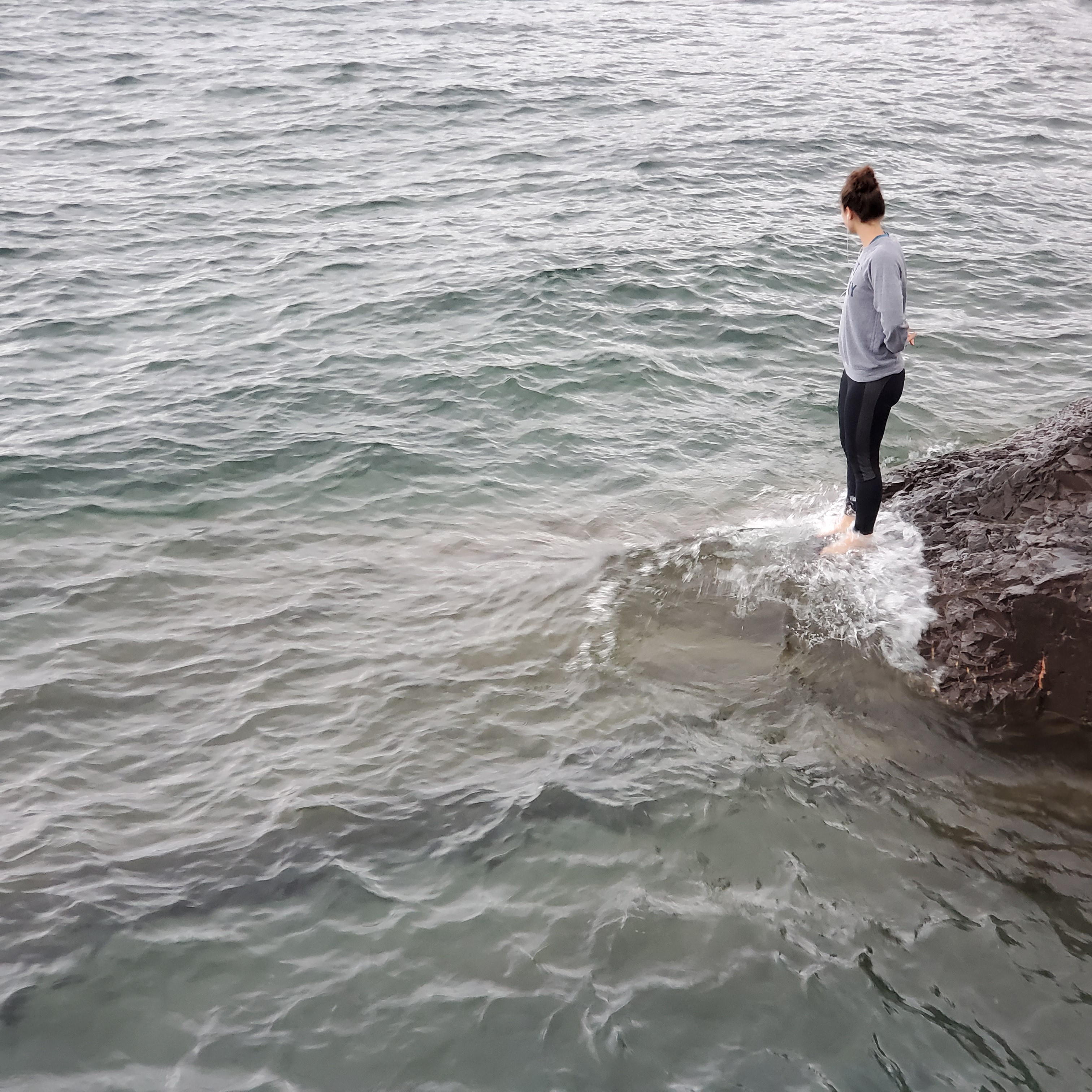
“When you’ve escaped rough waters, and your loved one is drowning, you want to jump in to save them, and they want you to jump in to save them, but if you jump in, you cannot save them. You’ll be drowning, too, and to top it off you’ll probably get bonked on the head as they thrash about trying to hold onto you. No, once you’ve escaped the waters, you can’t go back in. You barely made it out alive to begin with, and you certainly won’t have the capacity to do it again dragging someone else out with you. The loving thing to do is to say no to jumping back in. Instead, you can throw a rope. You can say, ‘hey–it’s safe up here on the dock. I’m here for you if you’ll grab the rope and get out of the water.’ And of course, you’ll feel guilty for not jumping back in, and of course, they will feel you don’t love them. If you loved them, they think, you’d jump back in. As long as you refuse to join them in the dangerous waters, they’ll feel betrayed, unloved. But, there’s another thing: They can see you. They see that someone made it to safety. They see that it’s possible. They see there’s a way to get out. They see that life outside the water is an option. They see you living. They see hope. They may feel bitter, but they see hope. And one day, maybe, just maybe . . . they’ll join you in the safety. And maybe, just maybe, it was your refusal to jump back into the rough waters that made you the proof they needed–proof that they, also, were allowed and able to come on shore.”
You’re a little bit like a lighthouse, showing the way. A lighthouse can’t help a battered boat if the lighthouse jumps in and gets tossed about, too. A lighthouse shows . . . hope.
~
Let’s talk about family. The most dangerous F-word. Dangerous because family is wonderful. It’s maybe literally the absolute top most best. In theory. And because it’s the best, because it “comes first,” its waters get pretty muddy.
If you found your way out of a toxic family environment, and still have family members you love who are trying to fit into that toxic environment, I bet I can tell a couple things about you: You sometimes feel guilty. You want SO badly to help. And love makes you so, so, so tempted to put yourself back in harm’s way. In fact, I bet, like everyone who has escaped toxicity, you’ve cycled in and out, diving back into the waves to try to save your sister, diving back into the waves to “be there for” your brother, diving back into the waves to “help” your mother, diving back into the waves so your father doesn’t have to be alone. . . . . . . Has it ever worked?
I know the deeply unhealthy family dynamic doesn’t resonate with everyone. If this isn’t you, bear with me, because it’s more than just family. But for now imagine with those of us who don’t have to use our imaginations because we remember it: How did you make it out of the abuse? Out of the web? The manipulation? The narcissistic control? How did you make it out of the deeply unhealthy environment?
Maybe you fought and fought and fought and fought and argued and argued and begged and begged and tried every which way to beat the toxicity. Spent years trying to heal the disease. And each day, it wore you out, held you down, as your life slipped away, a life very much not-yours-at-all.
Until one day, as a psychologist mentor of mine puts it, you “started on the other side of the wall.” (He actually uses this concept in a little different sense, but the effect is the same.) In other words: Instead of trying desperately, one brick at a time, to unbuild a wall of dysfunction and abuse and hurt and struggle and betrayal and fear and stuckness, you just . . . start on the other side. Leave the wall alone. You don’t have to unbuild it. You don’t have to “beat” the toxicity. You don’t have to heal the diseased environment. You just choose to start on the other side of the wall. To step out of it. After years and years, one day you stopped trying to calm the waves, held onto the rope being offered by the world outside the toxic environment, and climbed on shore.
I bet you didn’t find your freedom by having other people jump in and live with you in an unhealthy family dynamic. I bet you believed that you could escape the abuse, that you could find freedom, peace, happiness, healthiness. And I bet you believed that because you saw proof. Someone, somewhere, was a picture to you of love. An example of what functional relationships look like. A demonstration to you of healthy life on the other side of the wall . . . up on the shore, above the waves . . . you saw a lighthouse.
So if what saved your life, brought you into freedom and health, wasn’t winning the fight against a toxic environment, but stepping out of it–why do we suppose, again and again and again, that another loved one’s way out will involve staying in the unhealthy environment and trying to beat it? If someone (perhaps completely unknowingly) once held our rope, so we could climb out–why would we think our loved one is going to swim to safety without a rope if we jump back into the raging waters with them?
If what gave us the hope to step out was seeing that there was life to taste on the outside, why wouldn’t we stay on the outside, living a free and beautiful and healthy and functional and fulfilling life, so that the ones we wish we could save could see that there’s another way? Hope?
~
If all this family toxicity talk doesn’t resonate, because no matter how imperfect every family is, some are beautiful, safe places with healthy roots of love and kindness and support–and that’s the family you’ve known–there are still other storms you’ve escaped.
I remember my first job was at a place I eventually learned was absolutely notorious (at least at the time) for chewing up and spitting out its staff. Especially managers. The abuse we all went through was shocking. Fair pay, sufficient staffing, professional treatment–those things aren’t necessary when you can “vision” and “care” and “team-spirit” your people into working themselves to the bone or (surprisingly frequently) working hours and hours off the clock. I heard it described frequently as a “cult.”
There was so. Much. Manipulation. Everyone was drowning. One brave and visionary young manager after another tried to fix it. Things never, ever got better, but we kept thinking “if only I try harder,” because the one thing this place was good at was whipping up the strong emotion of loyalty. We stayed, because we cared.
I watched a lot of beautiful people fall apart under the weight, tirelessly swimming against the current to try to make it better. Nobody wanted to leave, because everybody desperately needed each other. We all needed each drowning other to save each drowning other. Actually–everybody wanted to leave and said so almost every day, but nobody could.
Because . . . we can’t leave the people we care about in alone in a bad place.
Love. We stayed in an impossibly unhealthy situation because we loved each other.
It was beautifully depressing.
Every once in a while, somebody would finally up and walk out. It was like they had woken up.
And then a couple months later, they’d come stop by. We’d share laughs and hugs and memories and they would tell us about how much relief they felt, how much happier they were, how much less stressed, now that they had gotten out.
Weirdly (actually not so weirdly if we understand how strong love is), they would sometimes come back. It was always their people, the fun and love and camaraderie they missed, that brought them back. And, again, they would slowly fall apart until they, again, walked away. Eventually, they learned the lesson that jumping back in would never, ever, ever work.
One lucky day, I became one of those managers who escaped. I had been completely losing myself and finally “woke up” and hopped out. And it was amazing. Afterward I frequently stopped by and said hello to my old team–my friends. I’d listen to the hopeless, exhausted stories of how much worse it had gotten (I hadn’t thought it could get any worse). And they’d ask how I was doing, and I’d get to say, “Oh man, I’m doing so much better now.” And they’d get this longing, dreamlike expression and go, “Man . . . I really need to get out of this place . . .”
Hope.
The lighthouse, proving dry, safe, hopeful land.
~
Maybe the workplace thing doesn’t speak to you, but you’ve got this one friend who is an absolutely beautiful, precious, wonderful person and you love them to death, but they’re deep, deep, deep in a sad place, and they really, really, really need you to join them there.
And you can’t. You can’t spend all day every day letting them hang onto you for dear life, telling you every hurt and every problem and every fear and every dark thought, because . . . well because you’re a person, too, and you have your dreams and your family and your books and your other friends and your sleep that you need.
Maybe you found a really healthy way to be there for them by having some boundaries: Saying “hello” and “I love you” every day, but only having a long chat once a week; Telling them you can’t stay up with them all night every night, but you’ll check in first thing tomorrow morning.
Or maybe, because you are a loving human and they are a human so-worth-loving, you give up your boundaries and you jump in with them. You set aside all your good things, happy things, other friendships, hobbies, tasks, sleep, rest, plans, dreams . . . and you jump in with them, feel every hurt they feel, carry every heaviness they carry.
And soon, you can’t help them anymore.
In fact, soon, you’re right where they are. You’re both falling apart. And you can’t help each other. And you’ve lost all your own hope.
Or maybe that’s not how the story ends, because you did stick to healthy boundaries. You did secure your own oxygen mask first, and that meant that you didn’t leave that friend alone, but you also kept time for yourself and for your other loved ones. You stayed healthy. You had happy times, you did exciting things, you enjoyed your hobbies, and you kept up on sleep.
This one’s tough, because the depression it sounds like this imaginary friend is struggling with doesn’t have an easy fix. It’s not quite the same as “starting on the other side of the wall.” Just being a shining example to them that “people can sometimes be happy” might not save them. In fact, there’s a very, very good chance it won’t. But still, there is that chance that your freedom and health does give them hope. Even while they feel let down that you need your own boundaries–feeling let down, because through no fault of their own, they are absolutely drowning and can only see danger and rejection in your boundaries. . . . Even while they feel that betrayal, maybe, maybe you are a sort of a lighthouse. An example of someone doing whatever yucky things it takes to take care of their own mental health.
All these scenarios are tough, actually, because being a stable, happy, healthy lighthouse doesn’t guarantee safety for anyone–not your abused family member, not your burnt out co-worker, not your struggling friend . . .
There’s the rub: You actually can’t save people.
It’s not up to you.
And you certainly can’t save them by jumping back into the thing that almost killed you. By having two people thrashing against the current instead of one.
But you can stand on the dock and hold the rope and when they’re someday able and ready to climb out, you’ll be there for them.
Maybe the very best chance they’ve got is seeing proof that there is freedom.
Actually, if you can’t help but jump back in and drown alongside your loved ones, you’re proving to them a very sad lesson: “There is no way out. You tried to escape, but you’re back here drowning with me again. I guess this is what we’re stuck with. Drowning.”
~
I recently had a tough but hopeful talk with that psychologist mentor of mine I mentioned. What do I do with all the world’s heaviness that is dragging me under? So, so, so many suffer. Needlessly. Unjustly. So much hate, so much prejudice, so much looking the other way, so much carelessness. This massively wealthy world is full of cold, hungry, sick, and homeless. All over the globe. Not just in that remote village or third world city. Like . . . right here. On every corner in Minneapolis. New York. Portland. San Francisco. Atlanta. Everywhere. That’s hard to sleep with. It makes me sad and angry when I think about it. And it makes me sad and angry all the time when I think about it all the time.
How can I carry all this weight?
His answer? “You can’t.”
You can carry some of it. You can carry a lot of it some of the time. But you can’t carry all of it. And you can’t carry any of it all of the time. You can’t help the cold, hungry, sick, and homeless by falling apart under the weight of the entire world.
Absolutely you can help. And you should. And blissful ignorance–turning a blind eye–is gross.
But you can’t carry it all, and you can’t carry it all the time.
It makes your “help” worthless.
You drowning helps no one.
~
Back to where we started–Love is an incredibly powerful emotion. It is wonderful. But it can be so overpowering that we can’t think clearly.
“Love” ignores the flight attendant and tries heroically to strap everyone else’s oxygen mask on first. Heroically and fruitlessly.
“Love” screams deafeningly that you can never, ever, ever leave family behind.
“Love” leaves us feeling guilty and unsettled when we have to tell our struggling friend once again that we have to go now.
“Love” begs us to stay. Always stay. Stay with the ones who are drowning.
“Love” tells us to throw our health and our hopes and our dreams and our needs and our life away because we don’t want our drowning loved ones to drown alone.
~
I’m not saying that the right way is walking away, shutting out, ignoring, giving up on, or always choosing our own happiness.
What I do know, though, is that when “Love” is telling you to go to a place where you’re going to drown with the ones you want to help . . . and your drowning is not going to save them . . . there’s a better way you can love them.
Abusive families, cults, toxic workplaces, depression (for the record, 100%, depression is NOT in the same category as those others. Don’t misunderstand that. It’s just your inability to help if you drown, too, holds true in the face of every type of darkness) . . . one thing all kinds of dark places have in common is that the darkness cannot itself be changed to light. It is . . . darkness. There is not hope in the darkness. The hope is in the light, and the light is in a different place.
If you can hold the hand of someone walking out of darkness–wonderful, beautiful, worth every damn minute.
But if all you have to offer them is losing your own way in the dark, too . . . there’s no real hope for them in that.
If you’ve escaped a dark place, but you’ve left beautiful loved ones there, you have to remember how you escaped:
What did you see on the outside of the darkness that gave you that little glimmer of hope that there was light to be found?
Who was a stable, happy, healthy lighthouse for you?
And can you make the impossible-feeling choice to stand in the light and hold out your hand–your life a proof that freedom is out there? No matter how badly “Love” tells you to jump back in and drown with them?
They don’t need someone to drown with them.
They need a lighthouse.



















 peterelbridge.com