You may be the lighthouse they need

Have you seen Big Hero 6? If not, spoiler alert: So . . . Disney knows how to give us feelings. Oh man. To kick off the movie, the big brother runs into the burning building because he thinks someone is trapped inside it. And in a sudden explosion, he dies. Because that’s what happens in Disney movies: The characters love so much they’ll give up everything. It’s . . . powerful. Incredibly powerful.

People do that. Isn’t that amazing? We love each other so much, that we will die to save somebody else.

But sometimes in life, the thing that seems and sounds self-sacrificial doesn’t work. It’s why you’re told not to fumble around with everyone else’s oxygen masks before you’ve secured your own. Besides a few dramatic, life-and-death storybook moments, you can’t save other people by letting yourself die. Or even just by letting yourself fall apart, working yourself to the bone, or bleeding yourself dry.

Love is a beautiful thing, but it’s also such a strong and blinding emotion that it gets us into messy spots. We think we’re “being there for” someone, “helping” them, “saving” them, “rescuing” them . . . when in reality, we’re just drowning with them.

Feeling torn between the healthy boundaries I was setting with my family and the urge to give up all those boundaries so I could still show up to love and support, “no matter what”–my therapist gave me a thing to think about:

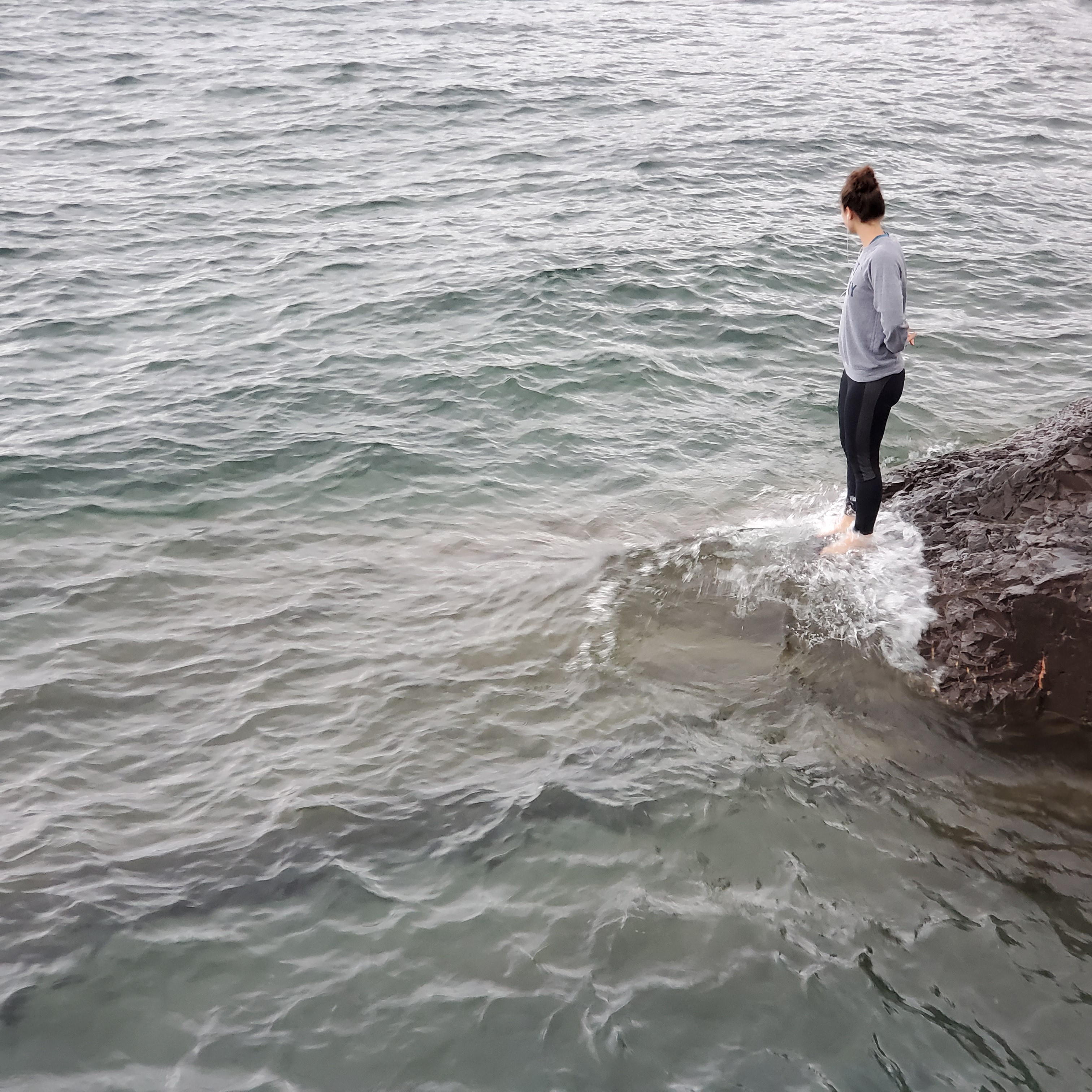
“When you’ve escaped rough waters, and your loved one is drowning, you want to jump in to save them, and they want you to jump in to save them, but if you jump in, you cannot save them. You’ll be drowning, too, and to top it off you’ll probably get bonked on the head as they thrash about trying to hold onto you. No, once you’ve escaped the waters, you can’t go back in. You barely made it out alive to begin with, and you certainly won’t have the capacity to do it again dragging someone else out with you. The loving thing to do is to say no to jumping back in. Instead, you can throw a rope. You can say, ‘hey–it’s safe up here on the dock. I’m here for you if you’ll grab the rope and get out of the water.’ And of course, you’ll feel guilty for not jumping back in, and of course, they will feel you don’t love them. If you loved them, they think, you’d jump back in. As long as you refuse to join them in the dangerous waters, they’ll feel betrayed, unloved. But, there’s another thing: They can see you. They see that someone made it to safety. They see that it’s possible. They see there’s a way to get out. They see that life outside the water is an option. They see you living. They see hope. They may feel bitter, but they see hope. And one day, maybe, just maybe . . . they’ll join you in the safety. And maybe, just maybe, it was your refusal to jump back into the rough waters that made you the proof they needed–proof that they, also, were allowed and able to come on shore.”

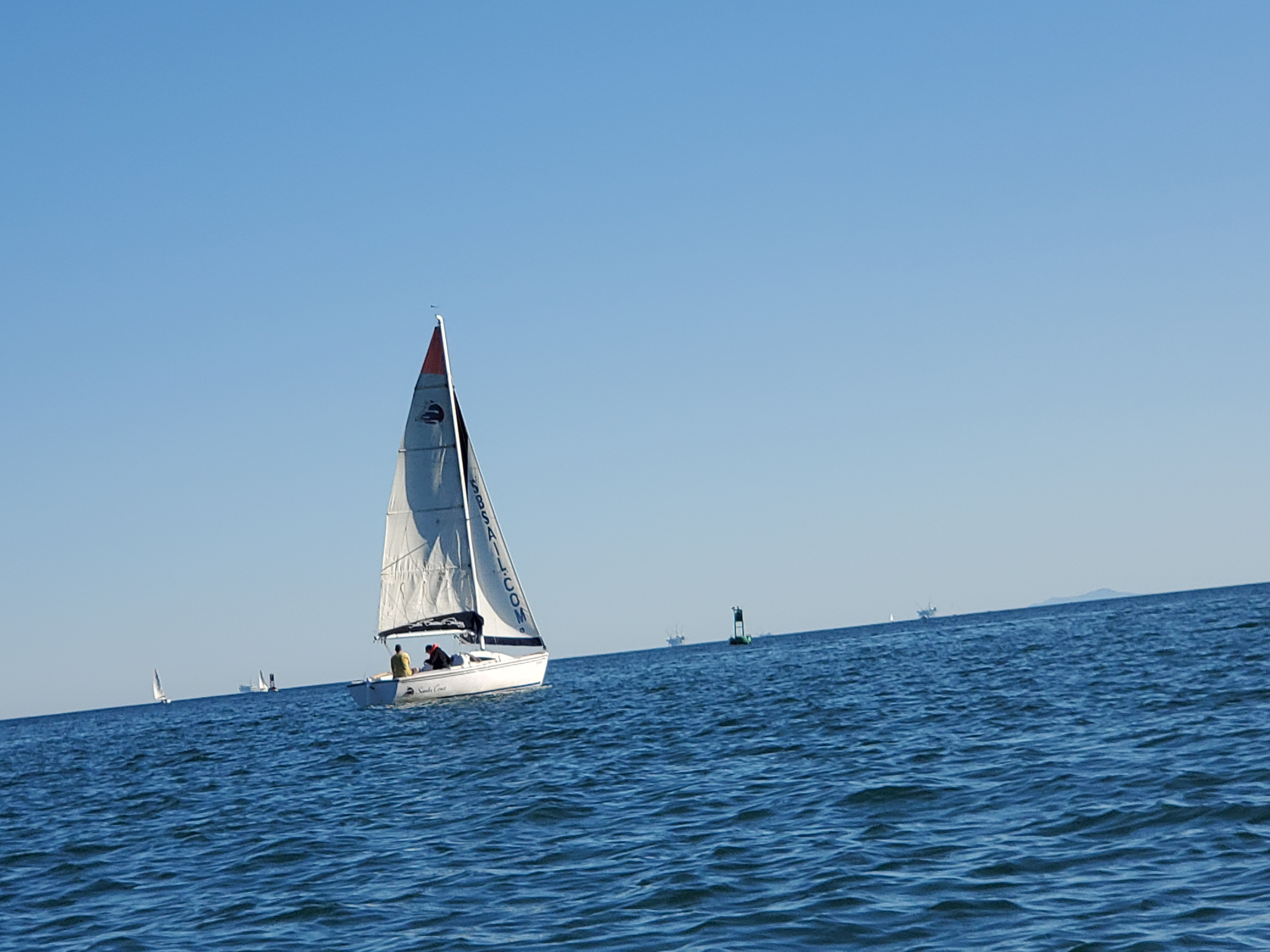
You’re a little bit like a lighthouse, showing the way. A lighthouse can’t help a battered boat if the lighthouse jumps in and gets tossed about, too. A lighthouse shows . . . hope.

~

Let’s talk about family. The most dangerous F-word. Dangerous because family is wonderful. It’s maybe literally the absolute top most best. In theory. And because it’s the best, because it “comes first,” its waters get pretty muddy.

If you found your way out of a toxic family environment, and still have family members you love who are trying to fit into that toxic environment, I bet I can tell a couple things about you: You sometimes feel guilty. You want SO badly to help. And love makes you so, so, so tempted to put yourself back in harm’s way. In fact, I bet, like everyone who has escaped toxicity, you’ve cycled in and out, diving back into the waves to try to save your sister, diving back into the waves to “be there for” your brother, diving back into the waves to “help” your mother, diving back into the waves so your father doesn’t have to be alone. . . . . . . Has it ever worked?

I know the deeply unhealthy family dynamic doesn’t resonate with everyone. If this isn’t you, bear with me, because it’s more than just family. But for now imagine with those of us who don’t have to use our imaginations because we remember it: How did you make it out of the abuse? Out of the web? The manipulation? The narcissistic control? How did you make it out of the deeply unhealthy environment?

Maybe you fought and fought and fought and fought and argued and argued and begged and begged and tried every which way to beat the toxicity. Spent years trying to heal the disease. And each day, it wore you out, held you down, as your life slipped away, a life very much not-yours-at-all.

Until one day, as a psychologist mentor of mine puts it, you “started on the other side of the wall.” (He actually uses this concept in a little different sense, but the effect is the same.) In other words: Instead of trying desperately, one brick at a time, to unbuild a wall of dysfunction and abuse and hurt and struggle and betrayal and fear and stuckness, you just . . . start on the other side. Leave the wall alone. You don’t have to unbuild it. You don’t have to “beat” the toxicity. You don’t have to heal the diseased environment. You just choose to start on the other side of the wall. To step out of it. After years and years, one day you stopped trying to calm the waves, held onto the rope being offered by the world outside the toxic environment, and climbed on shore.

I bet you didn’t find your freedom by having other people jump in and live with you in an unhealthy family dynamic. I bet you believed that you could escape the abuse, that you could find freedom, peace, happiness, healthiness. And I bet you believed that because you saw proof. Someone, somewhere, was a picture to you of love. An example of what functional relationships look like. A demonstration to you of healthy life on the other side of the wall . . . up on the shore, above the waves . . . you saw a lighthouse.

So if what saved your life, brought you into freedom and health, wasn’t winning the fight against a toxic environment, but stepping out of it–why do we suppose, again and again and again, that another loved one’s way out will involve staying in the unhealthy environment and trying to beat it? If someone (perhaps completely unknowingly) once held our rope, so we could climb out–why would we think our loved one is going to swim to safety without a rope if we jump back into the raging waters with them?

If what gave us the hope to step out was seeing that there was life to taste on the outside, why wouldn’t we stay on the outside, living a free and beautiful and healthy and functional and fulfilling life, so that the ones we wish we could save could see that there’s another way? Hope?

~

If all this family toxicity talk doesn’t resonate, because no matter how imperfect every family is, some are beautiful, safe places with healthy roots of love and kindness and support–and that’s the family you’ve known–there are still other storms you’ve escaped.

I remember my first job was at a place I eventually learned was absolutely notorious (at least at the time) for chewing up and spitting out its staff. Especially managers. The abuse we all went through was shocking. Fair pay, sufficient staffing, professional treatment–those things aren’t necessary when you can “vision” and “care” and “team-spirit” your people into working themselves to the bone or (surprisingly frequently) working hours and hours off the clock. I heard it described frequently as a “cult.”

There was so. Much. Manipulation. Everyone was drowning. One brave and visionary young manager after another tried to fix it. Things never, ever got better, but we kept thinking “if only I try harder,” because the one thing this place was good at was whipping up the strong emotion of loyalty. We stayed, because we cared.

I watched a lot of beautiful people fall apart under the weight, tirelessly swimming against the current to try to make it better. Nobody wanted to leave, because everybody desperately needed each other. We all needed each drowning other to save each drowning other. Actually–everybody wanted to leave and said so almost every day, but nobody could.

Because . . . we can’t leave the people we care about in alone in a bad place.

Love. We stayed in an impossibly unhealthy situation because we loved each other.

It was beautifully depressing.

Every once in a while, somebody would finally up and walk out. It was like they had woken up.

And then a couple months later, they’d come stop by. We’d share laughs and hugs and memories and they would tell us about how much relief they felt, how much happier they were, how much less stressed, now that they had gotten out.

Weirdly (actually not so weirdly if we understand how strong love is), they would sometimes come back. It was always their people, the fun and love and camaraderie they missed, that brought them back. And, again, they would slowly fall apart until they, again, walked away. Eventually, they learned the lesson that jumping back in would never, ever, ever work.

One lucky day, I became one of those managers who escaped. I had been completely losing myself and finally “woke up” and hopped out. And it was amazing. Afterward I frequently stopped by and said hello to my old team–my friends. I’d listen to the hopeless, exhausted stories of how much worse it had gotten (I hadn’t thought it could get any worse). And they’d ask how I was doing, and I’d get to say, “Oh man, I’m doing so much better now.” And they’d get this longing, dreamlike expression and go, “Man . . . I really need to get out of this place . . .”

Hope.

The lighthouse, proving dry, safe, hopeful land.

~

Maybe the workplace thing doesn’t speak to you, but you’ve got this one friend who is an absolutely beautiful, precious, wonderful person and you love them to death, but they’re deep, deep, deep in a sad place, and they really, really, really need you to join them there.

And you can’t. You can’t spend all day every day letting them hang onto you for dear life, telling you every hurt and every problem and every fear and every dark thought, because . . . well because you’re a person, too, and you have your dreams and your family and your books and your other friends and your sleep that you need.

Maybe you found a really healthy way to be there for them by having some boundaries: Saying “hello” and “I love you” every day, but only having a long chat once a week; Telling them you can’t stay up with them all night every night, but you’ll check in first thing tomorrow morning.

Or maybe, because you are a loving human and they are a human so-worth-loving, you give up your boundaries and you jump in with them. You set aside all your good things, happy things, other friendships, hobbies, tasks, sleep, rest, plans, dreams . . . and you jump in with them, feel every hurt they feel, carry every heaviness they carry.

And soon, you can’t help them anymore.

In fact, soon, you’re right where they are. You’re both falling apart. And you can’t help each other. And you’ve lost all your own hope.

Or maybe that’s not how the story ends, because you did stick to healthy boundaries. You did secure your own oxygen mask first, and that meant that you didn’t leave that friend alone, but you also kept time for yourself and for your other loved ones. You stayed healthy. You had happy times, you did exciting things, you enjoyed your hobbies, and you kept up on sleep.

This one’s tough, because the depression it sounds like this imaginary friend is struggling with doesn’t have an easy fix. It’s not quite the same as “starting on the other side of the wall.” Just being a shining example to them that “people can sometimes be happy” might not save them. In fact, there’s a very, very good chance it won’t. But still, there is that chance that your freedom and health does give them hope. Even while they feel let down that you need your own boundaries–feeling let down, because through no fault of their own, they are absolutely drowning and can only see danger and rejection in your boundaries. . . . Even while they feel that betrayal, maybe, maybe you are a sort of a lighthouse. An example of someone doing whatever yucky things it takes to take care of their own mental health.

All these scenarios are tough, actually, because being a stable, happy, healthy lighthouse doesn’t guarantee safety for anyone–not your abused family member, not your burnt out co-worker, not your struggling friend . . .

There’s the rub: You actually can’t save people.

It’s not up to you.

And you certainly can’t save them by jumping back into the thing that almost killed you. By having two people thrashing against the current instead of one.

But you can stand on the dock and hold the rope and when they’re someday able and ready to climb out, you’ll be there for them.

Maybe the very best chance they’ve got is seeing proof that there is freedom.

Actually, if you can’t help but jump back in and drown alongside your loved ones, you’re proving to them a very sad lesson: “There is no way out. You tried to escape, but you’re back here drowning with me again. I guess this is what we’re stuck with. Drowning.”

~

I recently had a tough but hopeful talk with that psychologist mentor of mine I mentioned. What do I do with all the world’s heaviness that is dragging me under? So, so, so many suffer. Needlessly. Unjustly. So much hate, so much prejudice, so much looking the other way, so much carelessness. This massively wealthy world is full of cold, hungry, sick, and homeless. All over the globe. Not just in that remote village or third world city. Like . . . right here. On every corner in Minneapolis. New York. Portland. San Francisco. Atlanta. Everywhere. That’s hard to sleep with. It makes me sad and angry when I think about it. And it makes me sad and angry all the time when I think about it all the time.

How can I carry all this weight?

His answer? “You can’t.”

You can carry some of it. You can carry a lot of it some of the time. But you can’t carry all of it. And you can’t carry any of it all of the time. You can’t help the cold, hungry, sick, and homeless by falling apart under the weight of the entire world.

Absolutely you can help. And you should. And blissful ignorance–turning a blind eye–is gross.

But you can’t carry it all, and you can’t carry it all the time.

It makes your “help” worthless.

You drowning helps no one.

~

Back to where we started–Love is an incredibly powerful emotion. It is wonderful. But it can be so overpowering that we can’t think clearly.

“Love” ignores the flight attendant and tries heroically to strap everyone else’s oxygen mask on first. Heroically and fruitlessly.

“Love” screams deafeningly that you can never, ever, ever leave family behind.

“Love” leaves us feeling guilty and unsettled when we have to tell our struggling friend once again that we have to go now.

“Love” begs us to stay. Always stay. Stay with the ones who are drowning.

“Love” tells us to throw our health and our hopes and our dreams and our needs and our life away because we don’t want our drowning loved ones to drown alone.

~

I’m not saying that the right way is walking away, shutting out, ignoring, giving up on, or always choosing our own happiness.

What I do know, though, is that when “Love” is telling you to go to a place where you’re going to drown with the ones you want to help . . . and your drowning is not going to save them . . . there’s a better way you can love them.

Abusive families, cults, toxic workplaces, depression (for the record, 100%, depression is NOT in the same category as those others. Don’t misunderstand that. It’s just your inability to help if you drown, too, holds true in the face of every type of darkness) . . . one thing all kinds of dark places have in common is that the darkness cannot itself be changed to light. It is . . . darkness. There is not hope in the darkness. The hope is in the light, and the light is in a different place.

If you can hold the hand of someone walking out of darkness–wonderful, beautiful, worth every damn minute.

But if all you have to offer them is losing your own way in the dark, too . . . there’s no real hope for them in that.

If you’ve escaped a dark place, but you’ve left beautiful loved ones there, you have to remember how you escaped:

What did you see on the outside of the darkness that gave you that little glimmer of hope that there was light to be found?

Who was a stable, happy, healthy lighthouse for you?

And can you make the impossible-feeling choice to stand in the light and hold out your hand–your life a proof that freedom is out there? No matter how badly “Love” tells you to jump back in and drown with them?

They don’t need someone to drown with them.

They need a lighthouse.

Letting the waves do their thing

Think back. Remember vulnerable-you. At your weakest, your most drained, your most crushed.

What did it?

“Trauma” is a universal experience. Your life may not have been dominated by it, but you’ve had your days.

Younger me found refuge in my bedroom closet. I’d spend hours in there. It felt a little safer.

Have you ever heard yourself say “I just want to hide under a rock” or “I just want to crawl under my blanket and never come out”?

What drove those big yucky feelings way back when you felt them and learned to fear them?

And–and here’s the fun part–do you ever still relive them now?

What brings you suddenly and helplessly back?

It’s human to have triggers.

Reliving trauma can turn the strongest person to mush. Sometimes with little warning.

And here’s the difficult part, but maybe the hopeful part . . .

What do you do when that happens?

When it hits you like a ton of bricks.

When you’re thrown right back into the saddest and most helpless feelings.

When you’re 12-years-old again getting screamed at or hit again.

When you’re suddenly friendless and unwantable again.

When someone’s looking at you that yucky way again.

When you hear that voice again that you really, really needed to never hear again.

When you have that old nightmare again.

When everything feels dangerous again.

When you need to go hide in your closet again.

What then?

I think sometimes we try to say, “I beat this then, I can beat this now.” And we get tough. Flex our I-don’t-cry muscles. Manufacture positivity.

And yes, there is some hope in a soft and encouraging reminder, “I made it through this before.”

But I don’t think the tough way through works in those darkest times.

Surfing is used frequently as an analogy for the ups and downs of life. When the waves come, you ride them, right?

But surfers also have to learn a life-saving lesson: When the water is too strong, trying to pull you under and away–which, absolutely, 100% it will be sometimes–you cannot fight it.

When the current is too strong, fighting against it will kill you.

You have to acknowledge and allow the power of water.

It is too strong to beat.

And when you stop fighting, embrace the overwhelming power of the water, let it do its massive thing with you, and even swim with it (or at least sort-of-with-it–like not against it) . . . it eventually spits you out into safety.

And I think life is the same way.

Like a sunny day on the beach, life is beautiful.

And like the surfing analogy goes, we can learn to ride its waves.

But when you wipe out (and you will), and find that the waves are just too damn big today (and you will), and that they’re pulling you down into the darkest darkness (and they will)–the only way out is through.

So what would happen if, when the trauma suddenly shows back up with a vengeance, and you’re suddenly a powerless, paralyzed kid again . . . what would happen if you just let the waves crash over you, let the overwhelming power of grief or fear or anger do its thing?

What if you stopped struggling, stopped denying, stopped “at-least”-ing, stopped numbing . . . and just fully accepted the overwhelming, crushing force of deep trauma?

Maybe you’d stop living in a cycle of exhaustion, fighting to keep your head above an angry ocean surface.

Maybe all the feelings would wash over you, envelop you, and fill you up.

And then, like a current in the sea, they could carry you through the darkness back to safety.

Emotions are designed to be felt.

Not fought.

Grief.

Fear.

Anger.

When fought, they will win. They’ll hold you down.

When acknowledged as overwhelmingly powerful . . . they’re “designed” to spit you out on the other side.

A psychologist friend of mine shares that a lot of his clients try desperately to run the other way when deep sadness shows up, distracting themselves, denying their feelings, and even avoiding big, beautiful life things so that reminders won’t trigger sadness again. They explain to him that they’re afraid if they let themselves feel the sadness all the way, it will never stop. It will be too powerful. It will crush them and hold them under for the rest of their lives. And he gets to give them a shot of hope that he’s learned as a professional who studies the human mind: No. It won’t. It will feel AWFUL. And then, once it’s done its thing, it will recede.

When old trauma and grief show up, do you get stuck in a cycle of “not listening, not listening” with your fingers plugging your ears, as if somehow, as long as you don’t cry, it will get better?

It doesn’t, does it?

What if you just let the feelings do what they’re designed to do?

Maybe you even go hide in your closet again and sob for a while, like when you were 15.

Then maybe, once its done its thing, it will let you back up for air, and you’ll see that the sun is shining.

And yes, the same wave will pull you under again sometime. But it doesn’t own you. You will come back up for air and surf the beautiful ocean of life again.

10 thoughts for your new year :)

Hi human.

At the end of a year, I like reflecting. Appreciating. Celebrating.

This year, I’m feeling happy about and thankful for and excited by my 7 years of blogging–how it’s grown, growing . . . I feel proud of myself, which didn’t used to be allowed. And I feel so, so, so thankful for all my friends–personally familiar or connected only by our shared humanity–who have read my blog, shared my posts, and let me know when words I’ve expressed have touched their soul in some way: Made to feel less alone, sparked with inspiration or energy, lent courage . . .

We’re all “just” humans–very real humans–(yes, all of us, even the put-together ones)–daily stumbling through the dark, awkwardly and beautifully figuring out this “Life” thing–together.

My passion in life has something to do with grabbing the hand of anyone-anywhere and saying “It’s okay that you’re stumbling through the dark . . . me, too . . . maybe we can help each other?”

Helping each other, I think, looks like listening and sharing. All the deep stuff. Thanks to all our own unique and odd adventures through life’s ups and downs, we’ve each acquired quite a lot of wisdom–often without even realizing it. And sometimes it seems oh-so-random whose wisdom helps who–whose experiences or perspectives or even unique language just happens to resonate, happens to be EXACTLY what “works” for someone in need.

So: Speak. And listen. Ask the deep questions. Share the deep feelings. Remember the humanity in each of us. Dare to connect. Be bravely real.

Anyway, friends, I’m so grateful to know in some ways I get to help some beautiful people stumble upon some of the wisdom they’ve been looking for. Writing makes me feel alive, it makes things makes sense to me, and once in a while I get to hear someone say “I needed to read this,” and that is about the most fulfilling sentence I ever, ever hear.

To celebrate, I’m wrapping up the last few days of 2020 by sharing my top 10 favorite blog posts I’ve written. If you click through the links below for some year-end reading over the next few days, I hope they speak to you in some helpful way–and if they do, I’d be honored if you pass it along, and I’d love to hear what exactly resonated.

Thanks for reading friends!


#10. The problem with growing up

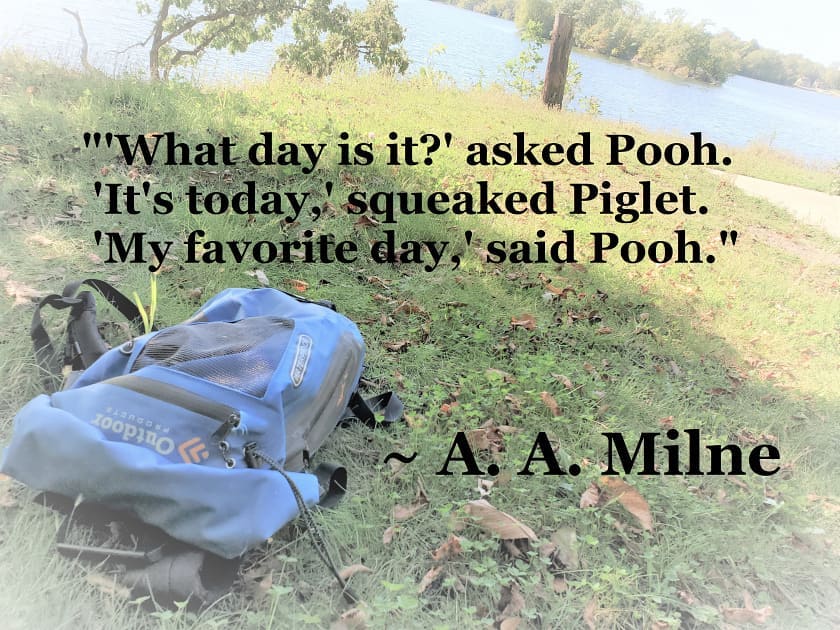
This is an easy one. Very short. Like 33-words-and-a-Winnie-the-Pooh-quote short.

I love this one because it is the one thing I need need need to keep remembering every every every year, month, week, day.

Keep returning to your inner child, my friend.


#9. We eloped to Italy!

I usually write about “deep” or “important” topics–at least in my mind. So when I was trying to narrow down to my 9th favorite blog post I’ve ever written, this one jumps out at me. Because it’s not a “topic,” it’s a celebration. A shameless reveling in the most wonderful memories of the absolutely most bestest day of my life.

I love, love, love sharing about this day with anyone who will listen–not because it’s worth your time, but because it’s worth my whole life. So thanks for letting me share this biggest happiness thing with you. I don’t know that I’ll ever stop being excited about it.


#8. My 100th post: A few thoughts about writing

Do I have any writer friends out there? Or friends who sometimes write? Even if it is “just short” or “just silly” or “just on Facebook” and “doesn’t count”?

Maybe you don’t write, you “just” talk to people, or do meaningful projects at work, or give advice, or share your story . . .

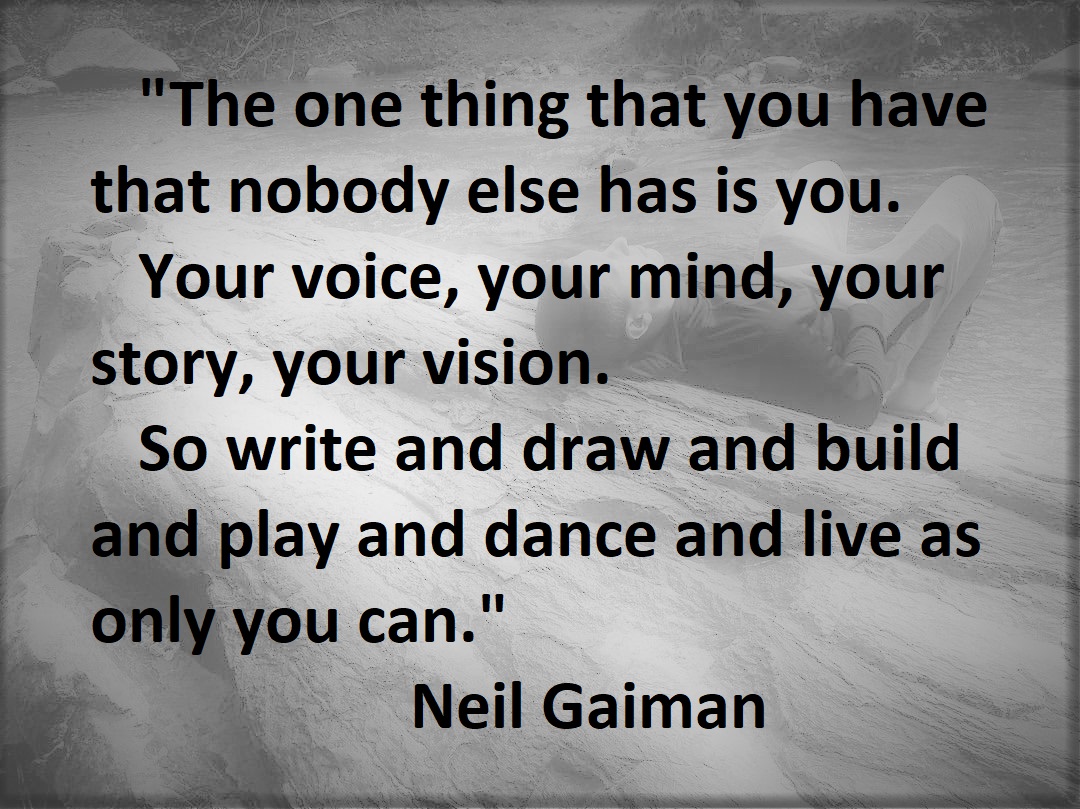
People need your voice.

And your voice is so much more perfect than you think.

This is for you.


#7. Canadian Rockies adventure

The holidays and new year season reminds me of the adventure of life. Always. Times to remember, beautiful places we’ve gotten to explore, fun little life moments . . .

This–one of my favorites–is an adventure memory. In a year full of staying at home and not doing stuff, I hope these pictures scratch the wander itch for you.

Mountains again so soon!


#6. Death

Trudging through the snow with a good friend last Saturday, we talked about death. He told me about his own experiences. And I shared that it’s actually a topic I think about a lot. Like it even keeps me up at night sometimes. (That may be largely thanks to the way I grew up. It’s what kept 13-year-old me awake at night, too.)

We don’t usually admit or advertise that we think about the really sad, awful, unknown things (you do too sometimes, don’t you?). So we stay alone about them. Struggling silently.

When I wrote down and shuffled around my favorite things I’ve ever written, this landed high up on the list. Because it’s deeply honest and it’s . . . really, really, really BIG. . . . Because it’s a universal experience. It’s one we ALL face.

So maybe we can face it together?

I wrote this right after my friend died. I didn’t even realize it was sort of for him until I’d finished writing it–why it was so loud in my mind. Death is not easy.

Wishing you peace and warm hugs.


#5. Happy Thanksgiving 2019!

This is a peek into me. But more than that, it’s a peek into what it means to be human.

And it’s a little celebration of all the different freedoms we find as we learn health for our minds and our hearts.

Keep on finding freedom and finding You. 2021 will be a good year for it.


#4. Sad people

Do you feel like you HAVE to be a “happy” person?

This is one of the most personal things I’ve ever written, which feels . . . scary and good, all at once.

I love this blog post because it is about deep understanding and acceptance of ourselves and each other–even for those of us who have a lot of sadness . . . for a little while or a long, long time.

It also carries ten pieces of advice at the end that I think are some of the most helpful if you are sad or love someone who is.

Wishing you radical self-acceptance and self-love. And wishing your sad friends acceptance and love from YOU.


#3. What we got wrong about love

Can I ask you a question? I’d love to read your answer in the comments here or, if you have my contact–shoot me a message. I’d love to chat. Here’s the question: What dysfunctional things did you learn about love? Things that tell you you’re not “good enough” or “worthy.” Or that make you afraid you’ll lose your worth if you lose things like your health or skills or relationships? How has it impacted you? And how have you set out to re-learn real love?

This is my 3rd favorite thing I’ve ever written. You can read it, OR listen to it while you drive or do dishes or work out or whatever you do! It’s not short, because it goes deep. Deep into our deepest experiences that shape our hearts.

If my thoughts in this post are especially helpful to you–make you feel understood or help put a finger on what hasn’t felt right about your self-judgments . . . I’d love to hear, and I’d be honored if you share it with someone else you love.

“Love” is an important concept to not get backwards.

Wishing you all true, no-strings-attached LOVE in 2021!


#2. I have anxiety and that’s okay

I don’t want you to feel alone.

That is why I wrote this.

If it speaks to you, if it helps you–pass it on. Or, better yet: Write your own version. I know you have one.

You are not alone. And you are loved.


#1. If I could send a message to 18-year-old me

As a year turns over and we think about past and future, what we’ve lost and what we’ve found, and all the changes and roller coasters and adventures in life . . .

I want to share with you my FAVORITE thing I’ve ever ever written.

I hope this speaks to you.

It’s amazing how much alike we all are, isn’t it?

Maybe we could help each other . . . ?


LOVE TO YOU ALL THIS NEW YEAR!

Wishing you peace and presence and all the feelings in 2021.

<3

Cheers!

P.S. Thanks for being on my writing journey with me, friends. From the bottom of my heart. This is so special for me. I appreciate having your ear and hearing your thoughts. You and I are here to help each other. <3

Wishes for 2021

My wish for 2021: That it will be a year of LOVE.

In 2021, we will listen more.

In 2021, we will surround ourselves with people who look and think and sound and live and celebrate and feel and act differently than we do.

In 2021, we will work together with people who are not like us (but really just like us).

In 2021, we will “cancel” less and communicate more.

In 2021, we will be radically compassionate.

In 2021, when you and I get the chance to experience the magic of conversation, we’ll go deep–deep to the places where we remember what inspires. And deep to places where we discover that you and I actually share the same fears and hopes.

In 2021, we will use our breath to calm ourselves and learn to pause regularly and think for a minute before speaking.

In 2021, cruel, hateful speech and bullying will not be celebrated, or even accepted. In any way. Ever.

In 2021, the go-to will be understanding, not escalation. Never escalation. No more escalation. Ever.

In 2021, we will encourage the peaceful work of coming together. We will not instigate or cheer on violence and hate.

In 2021, the words and behavior of our leaders won’t make us embarrassed and nervous as citizens of a big, beautiful, diverse world.

In 2021, when we feel fears, we will explore those fears a little more deeply before we act on them. We’ll think of the bigger picture of humanity in those moments. “How can I handle this momentary fear in a way that doesn’t push humanity further into hate?”

In 2021, we will stay very honest and bold about our anger and disagreement. But we’ll lose the sarcasm and taunting and bullying.

In 2021, we will fight tirelessly for a world in which nobody will be disrespected, disadvantaged, or live in fear because of their skin color, accent, social status, shape, disability, gender, or sexuality.

In 2021, we will see every life as valuable.

In 2021, we will SEE EVERYBODY. The homeless man on the street in downtown Minneapolis. The entrepreneur who has worked 80 hours a week to give a contribution to the world, and the world to her family. The terrified but brave mother fleeing across the border with her little child. The 13-year-old dissociating in class because he’s being abused at home. The small town business owner who can’t afford for taxes to be raised. The little Uyghur girl in China who hasn’t seen her mom for a long, long time. The suburban mom who is hearing more and more stories of violent crime and would stop at nothing to protect her children. The governor making the toughest possible decisions, knowing the backlash that will come. The Black man everyone crosses the street to avoid. We will see everybody.

In 2021, we will search out the populations that, for one reason or another, can’t breathe. We won’t wait until a crisis to care about people being trampled by our world.

In 2021, we will stop thinking or acting like some lives are more important than others. Does patriotic have to mean that Americans (especially those whose families have been American for generations) should be happier and healthier than anyone else in the world?

In 2021, the god of Competition will be worshiped just a little less.

In 2021, we will stop chasing profits just long enough to make sure we’re prepared to take care of the vulnerable, the heroes, the small businesses, and the self-employed when the next pandemic happens. (And for that matter, to just take care of people in general all the time.)

In 2021, the health and safety of every human will be a higher priority than my right to only care about myself.

In 2021, I hope that social media platforms will change their algorithms that have been constantly showing each of us more and more and more of our own narrow views of reality.

In 2021, I would challenge every person in the United States to google the word “Dogmatism.”

And in 2021, I want to do hugs again, before the year is over. And have lots and lots of people over for a meal and laughter and being in each other’s space again. And I want to see smiles again when we get to take our masks off. And lots of hugs. Lots and lots of hugs.

Exhaling our way into a beautiful new year

Wishing you Love

The magic of conversation

How many unsaid things do you have simmering inside of you?

Saying things out loud helps in so many ways. It helps us think through things, solidify things, feel things, get over things. Sometimes just letting out a frustration makes it stop hurting, or putting an anxiety into words suddenly reveals its harmlessness. Many of us learn what we believe and care about by talking through our thoughts.

There is power in saying our stuff.

We are all surrounded by people. If you know a hundred people, you know two hundred ears. That should be enough, right?

And yet . . . how many unsaid things do you STILL have simmering inside of you?

~

A really wise friend likened a marriage to walking on a plank over the Grand Canyon. The view couldn’t be more beautiful, but the height couldn’t be scarier. Lay the same plank on the grass in your backyard, and you’d do it with your eyes closed.

The value and depth of our relationship and attachment to someone significantly impacts the fragility, the fear, the pressure, the importance. Saying the wrong thing–or even saying the right thing the wrong way–to your co-worker is, you know, oh well. . . . Saying it wrong to your best friend, to your life partner, to your mom, dad, daughter, son . . . those moments leave bigger scars.

Obviously–bla-bla-bla get “better” at your close relationships, go to therapy, learn to open up, etc. (Legit, actually do those things.) But the truth is still: The more Companionshipy a relationship, the higher the stakes when it comes to what you say, how you say it, when, why . . .

So we clam up. Because the people we talk to are people that need us to say this, to not say that–people who need us to keep showing up the way we’ve shown up for them, people in whose lives we function a bit as an anchor–stable, consistent, strong–dependably us. They’re people who we want to speak extra gently to, people who we want to be extra positive toward. And sometimes they’re people we’re extra worried might have a problem with who we are becoming. The people I’m close to know Peter as Peter. Some of them need Peter to keep being Peter. They stand to lose more if Peter suddenly sounds more like Jason or Jack or Jimothy. (#fortheofficefans)

On the other hand, we’re surrounded by thousands and thousands of people every day who live and sleep and think and talk and listen less than a mile away from us who don’t know that we’re Peter and don’t need us to sound today like Peter has sounded all his life. What if you could talk to one of those people today? Do you think maybe you’d get some stuff off your chest? Try on a new perspective? Find some freedom to learn who you really are, what you really believe and care about? Would it help to practice the tough, weird, scary topics with people who aren’t going to be as worried or sad or stressed or hurt if you don’t get it just-right today?

I feel like I need to say a thousand times: A good goal is that you feel this freedom in your close relationships. AND . . . I bet that’s a goal you’ll never stop working toward, so in the meantime . . . what freedom is waiting for you in conversations with everyone else? Everyone you haven’t talked to yet?

Conversation is different than companionship. It’s not better, just different. They’re not totally separate: You find companions in conversation. And then you get lifelong conversation from those companions. But we frequently limit our conversation to those with whom we can already claim companionship. And I think this limits us a lot. Robs us of a lot of magic.

I propose that you and I should talk a lot more to a lot of people who we know a lot less.

~

Photo by Micki Benson

This year, I’ve been part of a movement that is spreading across the world. A movement that has connected brave voices with listening ears from Minnesota to California to New Mexico to Florida to Manitoba. I’ve seen people try on their voices and discover they can make an impact. I’ve watched people voice their anger about “those kinds of people” and then learn that “those kinds of people” turn out to be you and me and then discover that we actually can connect. I’ve witnessed people express their biggest fears and insecurities only to find a bunch of people waiting to hold them up in loving support. I’ve heard people open up about their mental health, their traumas, their loneliness, their struggles, their demons, and their dreams.

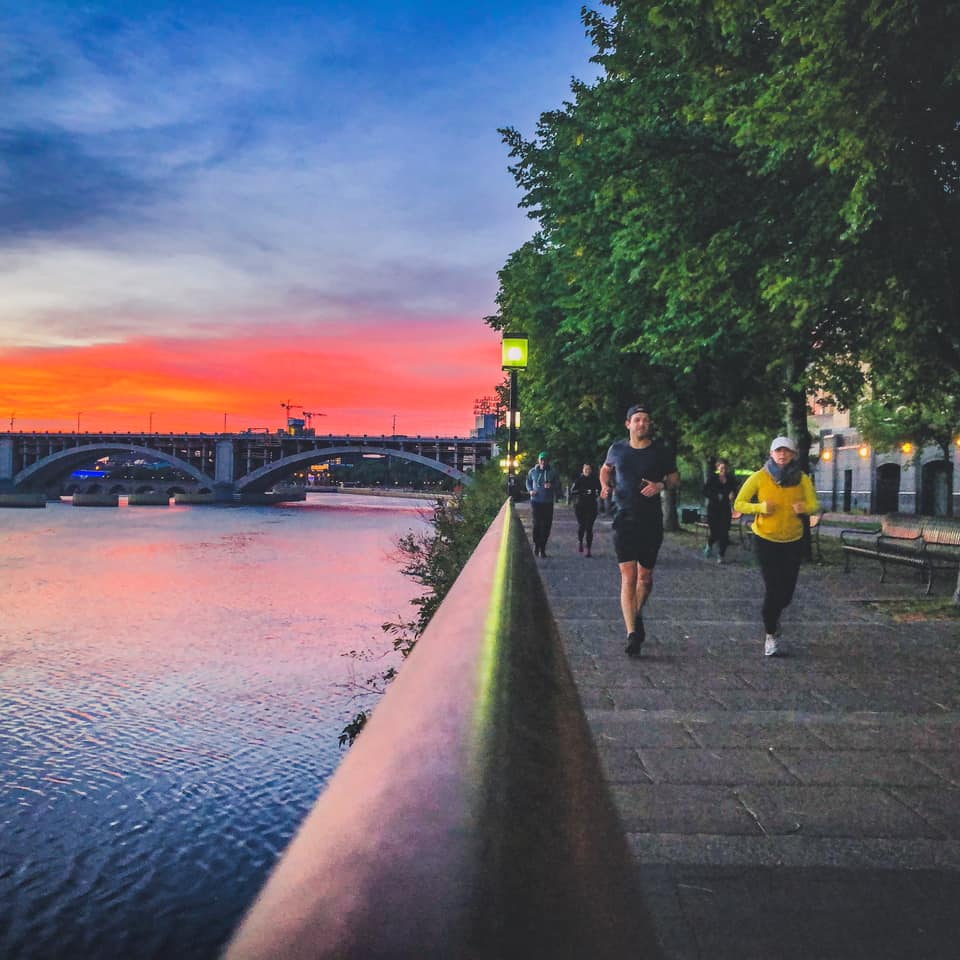
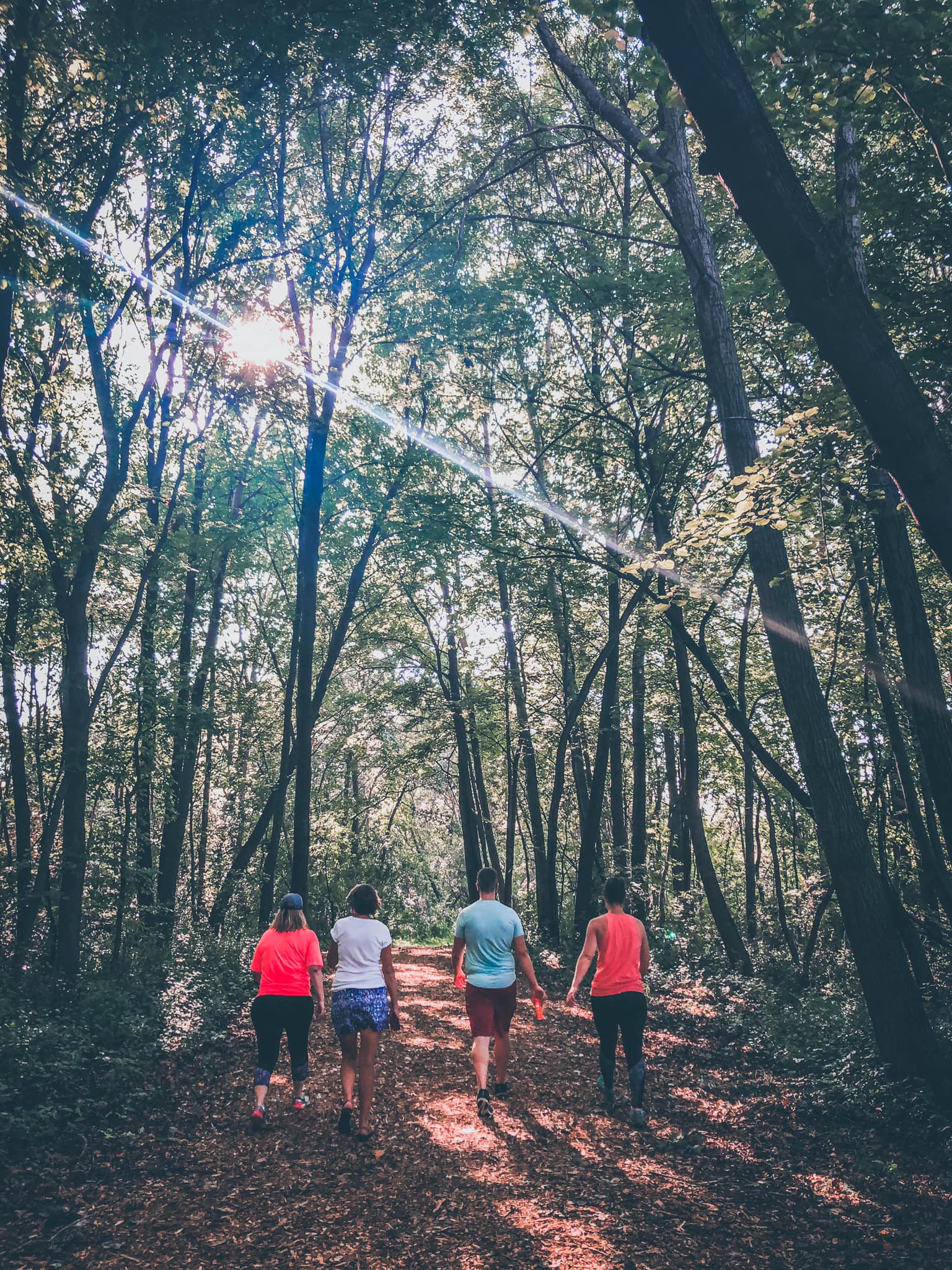
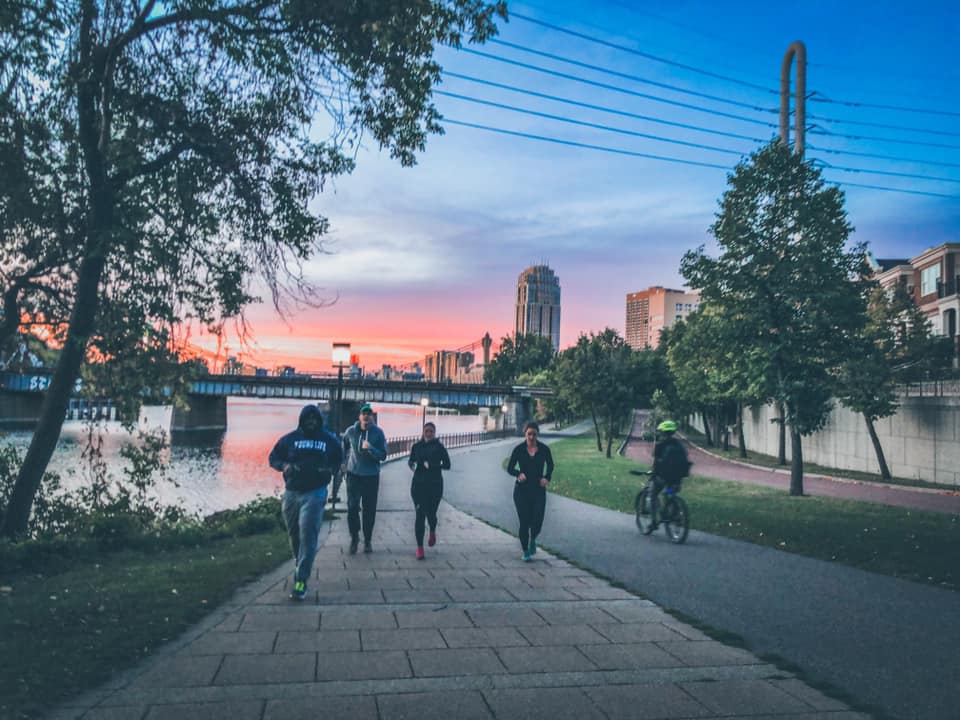
It’s really not a complicated movement. We call it 5K Everyday Conversations, because every single day, some place (or places) at some time (or times), we gather–three of us or eight of us or twenty-two of us–to spend 3.1 miles (ish) having conversation. Some people run 3.1 miles with each other fast and talk about the stuff they’re angry about, or the habits they’re building. Some run it at a calmer pace, listening to each other share about a stressful family relationship or dream out loud about the work they’d like to do. Some, understanding that that the conversation itself is magic, show up for the conversation without worrying about the movement. And some hop online in Canada to be an ear for someone holding conversation through live video from their home in Wisconsin.

Why the running part? Hmmm . . . helping rid the world of the superfluous statement “I’m not a runner.” And because movement is fun. Happy. Because a few run every mile they can, and a few have been looking for motivation to run. Everyone has their own reason. . . . What I’ve found, though, is that running turns out to be the best anesthetic to the pain and fear of saying hello to someone you don’t know. Nothing quite like panting and sweating to make us immediately drop all the posturing and see that you and I are just two humans. Movement breaks ice and warms hearts. It fuels the conversation.

So yes, it really is as simple as conversation. And it’s a powerful thing.

~

Experiencing so much no-strings-attached conversation this year, I’ve noticed a few magical things about it:

Conversation can hold no expectations for it to be more than conversation. Free. Pressureless.

Saying things out loud helps us get over things, release things.

It helps us see things clearly, helps us think through things.

Helps us feel seen, heard, appreciated, cared about, accepted, loved.

There is something really freeing about talking through the yucky stuff, the hard stuff, the delicate stuff–with a total stranger who doesn’t expect or need anything from you.

The braveness and freedom you get to practice with a stranger is easier to bring back home to the people you love deeper and therefore stress about more. No-strings-attached conversation is like a gym for your speaking-your-truth muscles. . . . Sort of like with that plank-over-the-Grand-Canyon analogy. What if you could practice walking on that narrow plank from not quite so great a height. Like–practice saying how you actually feel but with someone who doesn’t need quite as much from you. I wonder if you walked that plank in the grass every single day if next time you had to walk it over the Grand Canyon, you might trust your feet just a little bit more?

Not only do you get to try on bravery, you get to try on new ideas. Maybe I don’t usually speak kindly, or I’m not usually really open-minded, or not very accepting of this or that “type.” And maybe I want to try changing that–try a new way–see how it goes. What better place to try on a new way than in conversation with somebody I may have never spoken to and may never speak to again? It’s a free space. A safe space to try something new. (For example: I think a group run with a bunch of new faces was the first place I ever answered the “What do you do?” question by saying “I write a blog.” It felt good.)

Conversation with random-people can also be a helpful place to talk a little about your demons. I know there can be great risk in sharing, depending on the context. It’s hard to know where and when to open up. But . . . I’ve been really amazed–in a no-strings-attached conversation space–amazed at the stuff I’ve heard people get off their chests or open up about, and at the acceptance I myself have found as an also-complicated human being. Sometimes it’s easier to finally get words out like “I don’t think I can keep up this façade anymore” or “I think I have a problem” or “I need help” when it’s someone who doesn’t already need stuff from you. There is some safety in . . . strangers. Weird? Yeah . . . but it works.

Sometimes, with life being as complicated as it is, it can be easier to be there for people as an encouraging, accepting, listening ear when we don’t know them. Again–end goal would be this level of acceptance and trust in companionship, too . . . but it’s also true that in no-strings-attached conversation, it can be much easier for us to be there for people. Take, for example, the dad who is estranged from all his kids, because he screwed up a lot as a dad. And it haunts him. His family can’t be there for him anymore. But maybe a stranger . . . can? A stranger can see the very true and very important and very safe reality that, no matter the struggles or weaknesses or history–this is a beautiful human being who is worthy of love. A lot of us have had to let go of some people, and now spend sleepless nights worrying over where they’re getting their needed doses of love and acceptance. Conversation and respect with a family member comes with a ton of baggage that can be too heavy. But that same family member can find baggage-free conversation with a total stranger, a stranger who can be there for them. Maybe you’re that person who needs a stranger’s listening ear. Or maybe you’re that stranger who gets to be there for people who don’t have many people left. Or maybe you’re that stranger who can be there for that kid who just got chewed up and spat out by the unloving world they grew up in. You never know . . . lots of people with lots of weird stories who just need an ear sometimes. Sometimes a conversation with a stranger is exactly what is needed. Hope-giving. Life-saving. Perfect.

Conversation detached from ongoing companionship is also a healthy place for those of us who are struggling, going through rough patches, to shine–to be appreciated for exactly who we are, without this pressure to first graduate to a healthier season of life. That’s powerful and really, really good, too.

There’s another reason conversation with people we’re not close to is super powerful. It’s this: I’m probably, probably, probably close to people who are a lot like me. Think like me, enjoy the same stuff, rant about the same things, see the world through the same lenses. And sticking to the conversation of my closest companions means that I’ll never ever hear all the other truths screaming to be heard. The world is a big place with countless cultures and experiences and hurts and passions and values. And so much suffering in our world comes from “my group” not listening to “your group.” The only way we’ll ever take your experience seriously, care to help, notice how we’re affecting you–the only way to improve our world for each other is by listening to each other. Not listening to each me-clone. Listening to each OTHER. Hearing different perspectives.

Those thousands of people who aren’t your companions . . . they’re holding the eye-opening revelations for you. Waiting for you to say, “Hello, who are you, and what is happening to you, and what do you wish I understood about your world?”

Nothing bad ever came from listening more, understanding more, learning more, seeing people more. And nothing good ever came from settling comfortably into our own way of life and thinking, blocking out the inconvenient reality that our world really is very diverse and complicated.

Especially this year. We clearly haven’t been listening to each other in this world. Listening to our own people, yes. But not to those OTHERS.

So . . . say hello. Start the conversation. Watch the magic. Change the world.

Oh and just because this is one fun little bit of the magic: You never ever ever know where you’re going to find your life-long companions.

~

This year I’ve come to believe that you and I and EVERYONE would benefit from regular conversation with no strings attached, no expectations, no pressures, no agendas. Just conversation for conversation’s sake.

Conversation. Freedom. Magic.

Photo by Micki Benson

~

If all this sounds good to you, sounds . . . intriguing? A little hopeful? Magical, powerful, or like maybe there’s some hope there . . . I invite you to try one of two things:

Start a conversation with somebody.

And . . .

Follow 5K Everyday Conversations on Facebook and find a local time and place to join the conversation.

If you don’t find any local members, pick a time and place and invite a friend . . . or a stranger. Bring the magic of conversation to your own community, and feel your community open its arms a little wider every day. The whole world needs conversation.

And when you show up for a daily convo, and find yourself thinking “How does this work?” you can look back to that simple invitation a few paragraphs ago: Start a conversation with somebody. As simple, scary, and magical as that.

“Everyday in 2020 we have held space for people to meet for conversational movement. At the same time, we have been making the term “conversational movement” a thing. For 285 days we have been working to normalize and inclusivize two things: (1) People talking with people that they don’t know regularly. (2) People feeling safe “running” together. . . . This is what we mean when we say conversational movement. We move at the pace that allows conversation to happen between two or more people. We define running as an act not defined by speed but by the way it makes you feel…alive, full of breath, moved forward by things that are filling you up and people who are lightening your steps.”

JC Lippold, who extended the first 5K Everyday Conversations invitation, sparking the magic

The whole world needs conversation. You need it, I need it. You need my ear, I need yours. We both have some unsaid stuff, and we both have some corners of the world to open our eyes to.

It only happens if one of us gets up the courage to say “Hello.”

And from there–watch the magic unfold.

~

P.S. I feel like I just wrote a bunch about the heavy stuff with conversations–the struggles, the overcoming . . . also, maybe even especiallyconversation is just FUN and BEAUTIFUL and totally AWESOME. It WILL brighten your day.

Photo by Micki Benson