Noticing this moment

Eckhart Tolle - Most humans are never fully present

I have this compulsive habit of doing stuff on my days off. Lots of stuff. Too much stuff. It’s all stuff I love to do, totally worthwhile. I get really pumped about all these things I can do with all my free time. And then I do as much of the happy stuff as I can. But sometimes the more happy stuff I do, the less happy I feel.

In fact, I often find myself feeling anxious when I have spare time. Anxious that I won’t make the best of it. Anxious that I won’t do enough stuff that needs to be done or that I want to do. Anxious that the time will run out too quickly.

Does that ever happen to you? You get to the end of a weekend or a vacation, only to realize you spent so much time worrying about making the most of it that it slipped right through your fingers?

A couple weeks ago I took an afternoon off. This time I decided on a whim to go for a walk. No running, just a walk. No earbuds. No phone. Just walking and being with myself. Lots of freedom to think and feel. And see things! Things I don’t notice when I’m hurrying. Things like a colorful grasshopper I watched up close for a while.

I felt more peace and happiness in that quiet hour than I do in some entire weekends packed full of stuff to do. These kind of days always end up being my favorite.

I don’t think the problem is the stuff I do, either. One thing isn’t necessarily better or worse than the next. Some people take walks, some people go for runs, some people watch movies, and some people read books–and no matter what the activity, they can feel complete peace and freedom the whole while.

I think the key is incredibly simple. Whatever you are choosing to do, be there.

Be where you are right now. Notice the present moment. Your life in this world at this moment is exploding with color and music and flavor and feeling. But we spend so much time trying to make sure that right now becomes a good memory, that we miss the very thing we wanted the great memory to be about. We spend so much time trying to make this moment great, that we don’t see how incredible this moment already is.

Are you going to miss this moment?

“Most humans are never fully present in the now, because unconsciously they believe that the next moment must be more important than this one. But then you miss your whole life, which is never not now. And that’s a revelation for some people: to realize that your life is only every now.” – Eckhart Tolle

Observation Point, Zion National Park

Last month my wife and her sister and I drove 5000 miles around the western States. We experienced some incredible things. California’s redwoods, the great Grand Canyon, Painted Hills, The Loneliest Road in America, a Ghost Forest off the Oregon coast, and the beautiful paradise of Zion National Park. Oh, and a shocking low flyover by two fighter jets in the middle of nowhere.

There are so many stories to tell. But I want to share just one moment:

20170908_153124 (2)

Our first day in Zion, we hiked four miles of switchbacks, through narrow canyons and along sheer drop offs, all the way up to Observation Point. We could see the tiny paths we’d just come from over two thousand feet below. For a while we just sat at the top and breathed it in. It was so peaceful and beautiful.

Suddenly I found myself looking at life through a different perspective. For an amazing moment I saw all the little daily stresses and problems and dramas for what they were. Distractions. Life was not about who said that thing at work or whether my boss will still like me next year. It wasn’t about how much money I’d saved that month. Life was bigger than that. A lot bigger.

I spend most of the year working. Full time hours, narrowly focused, in a stressful environment. And while I sit at my desk I often find myself dreaming of that little corner of life that we call vacation. That thing that comes around once in a blue moon, where you get to go find a hidden gem somewhere to hang onto in your memory till the next vacation comes around.

But here, after several tough miles in the middle of nowhere (switchbacks put you in touch with your human self), I found myself glancing back at the little corner of life called a job. Sure, my work makes a difference, and jobs are important. But my job is just one tiny piece of this great big world that is mine for the taking. I can walk outside into a beautiful, real world whenever I choose. I can always live in that world I find on vacations. I just don’t always look.

My problems and stresses seemed about as small from the top of that cliff as the tiny trees that dotted the ground below. When I have to walk back down to the bottom and clock back in, those trees might look big again. But they’re not. And sometimes I have to remind myself of that. Sometimes I’ll need to step back and remember the freedom and perspective I found on the top of Observation Point, the freedom to live in a bigger world.

20170909_172121 (2)

20170908_175559 (2)

20170908_141930 (2)

20170908_180115 (2)

20170908_181810 (2)


They Have Feelings, Just Like You

There’s this one cashier at our grocery store that helps us sometimes. He’s disabled and has to sit on a stool while he slowly rings up our items. He’s very talkative and friendly, but his conversation is a little awkward.

I’ve noticed a lot of people avoid him. They know checkout will take longer and the topics will be weird, so they find a different line. More convenient, more comfortable. I caught myself avoiding his lane and felt awful.

He definitely notices when we recognize him and awkwardly shuffle away, as if we realized there’s a shorter line somewhere else. He can feel our impatience as he clumsily shoves our groceries into the bags. He knows we think his small talk is awkward. He can hear us thinking that employing a faster worker would be better customer service. After all, we’ve got important things to get to.

And he carries all this home with him every single night.

He’s a good sport and he makes the best of it. He tries to connect and he makes your day if he can. He knows some people like him. He’s proud of his work ethic and he’s a very sweet person. He’s got some friends and family who love him.

But sometimes he feels the hurt. Some days it really bothers him that people don’t want to see him. He wishes he could move faster so his customers would be satisfied. He replays the awkward comment he made to be funny, and hears again and again the pitying chuckle. He falls asleep to the impatient drum of your credit card on his counter. If he were more coordinated, he’d be more likable.

And he falls asleep with the same big feelings that I have when I’m embarrassed in front of my friends, the same big feelings you have when your boss makes you feel stupid.


“I can’t stand the IT guy. He’s super rude. Really unfriendly.”

Cassie always said what nobody else would say but everyone was thinking, so I knew that the rest of my team probably felt the same way about Ryan, who was there for the day installing new computers.

“Really? What happened?”

“I don’t know, he just… always looks really angry, and he seems annoyed when I tell him something’s not working. He never even says hi.”

I always encouraged my employees to speak freely, so I wanted Cassie to feel understood. But I’d worked with Ryan a lot, and he was a good guy.

“Have you gotten to talk to him much? He’s actually pretty nice once you get him talking. Maybe he’s a little shy, but he’s always been really helpful to me and he’s one of the hardest working people I know. You might like him if you get to know him.”

“Nope, his attitude sucks.” Cassie’s mind was made up.

Ryan is often misunderstood. He is very quiet and can be very serious. Focused, direct, and professional. Not exactly a social butterfly.

When people think and talk about Ryan the way Cassie did, it hurts Ryan. It’s not always to his face, but it gets around to him. Dirty looks, “feedback,” conversations overheard.

Cassie doesn’t know what has made Ryan who he is. Ryan served in active duty and saw some pretty dark stuff while trying to protect his country. Some of the stuff he had to see and do, he won’t talk about. “It just changes you,” he says. “You can never unsee it or undo it. And nobody back home will ever understand.”

Some nights he startles awake, ready to fight, only to find he’s sitting in a bed drenched in sweat. He has been through so much, sacrificed more than a lot of us can imagine. And it has left scars he carries with him to work every day–scars that rub people the wrong way. He’s seen more than just rainbows and butterflies, and you can see it on his face. But if you don’t know him already, it may just look like “unfriendliness.”

Ryan is a complete softy deep down. He’s head over heals for his wife and would give the world for his kids. He loves to serve. He has big feelings, just like the rest of us. It’s easy when we’re in Cassie’s position to forget that.


When I was about 7, I knew this girl named Bridget. She had a couple lively little siblings with cute curly hair–picture perfect. But she had plain black hair and lots of freckles. She was quiet and kept to herself. Shy.

Bridget brought me a picture that she drew of me as a gift. She had given me freckles, too.

“That’s so ugly! I don’t look like that at all! You’re so bad at drawing!” I yelled at her as I tore the picture down the middle and crumpled it up.

Tears welled up in Bridget’s eyes and she hurried away to hide. All alone.


Billions of people share this earth with you and me. Each one is unique. Each one has his or her own struggles and fears, insecurities and soft spots. But each one shares our humanness.

Look with compassion at the next person you see today, at the next person that bothers you, and the next stranger who interacts with you. They have feelings–big feelings–just like you. Good feelings and bad feelings. And you are going to have something to do with those feelings.

covey quote

I Think, But I Don’t Know

I grew up very smart, confident, and passionate. I thought very deeply, came to the right conclusions, and cared so much about everyone in my life that I had to help them see my conclusions, too. I never genuinely considered I might be getting stuff wrong until I had a big enough crush on a girl to listen when she told me I didn’t have all the answers.
What’s funny is that years later, the majority of big things I so confidently knew and so passionately tried to help other people understand–I no longer see the same way.
We all have our perspectives and our perceptions. We can’t help that they are very limited. And we can’t help but act according to them.

Seeing my own illusion
I remember one time I flew to another state to visit my recently married sister and brother-in-law. My sister and I had been extremely close friends for a long time and cared deeply for each other, so we were excited. But I was also there, more importantly, to visit the girl I was dating. The schedule was lopsided significantly in favor of girlfriend time. Later, my sister expressed that she was a little hurt by how the visit played out, and I just couldn’t understand. She supported my priorities but felt frustrated that it was very different than she expected. She had the impression that I was there to spend a few days with them, too. But I spent less time than expected with them, and when I was there I wasn’t exactly present. Again–and to my sister’s credit–she didn’t think my priorities were wrong. She just wished I had decided and communicated initially that I wouldn’t be spending much time with them. It would have saved her some disappointment. TO me, her feelings seemed a little selfish and unreasonable.
It wasn’t until years later when I experienced similar scenarios, but with roles reversed–I was the one with expectations too high, missing out on people I loved–that I finally understood that my sister was completely right. I wasn’t wrong, but she wasn’t either. I was so sure she was seeing things inaccurately, but she wasn’t. And I just was not in a place with my focus and priorities at the time where I could truly see her perspective. But years later, when I was in her position, I also felt a little ignored, mislead, and taken for granted. And it didn’t feel good.
I was so sure. Saw things so clearly. And I was thinking very deeply and had the best intentions. It wasn’t until much later that I realized that there was a completely different way to look at it. And this is just one example. There are a hundred more, and I’m sure you have plenty as well. Times you took a dogmatic stand, only to look back some time later in embarrassment.
Do you see the old lady? Or the young lady? Which one is the right one? (If this question doesn’t make sense to you, google “Stephen Covey old lady.”)
The problem is not that I took a stand or believed what I believed. The problem is not that I acted on my perceptions. The problem was what happens when I don’t recognize that there may be other perspectives–just as valid, just as clear.
This idea gives a deeper meaning to the term “Self-Centered.”
Sometimes we do what seem to us to be the greatest, kindest, most caring thing. But because it’s born out of our narrow perspective, because our focus is completely on our own Self’s perception, without attention to another’s interpretation, we can leave a path of hurt and confusion. We can act passionately in one direction, completely missing the collateral damage we’re doing in another direction.

Why do we see many things so clearly, but so differently?
For one very simple reason: We’re different people. I’m not you and you’re not me. I grew up in an extremely black-and-white home, preoccupied with ethics and judging whether we’re getting things right or wrong. Maybe you grew up in a similar home, but experienced so much hurt that you threw out all standards as causing dysfunction and depression.
Or maybe you grew up in a very chill home where good intentions were assumed, self-esteem was encouraged, and time and energy were devoted to free creativity and expression of individuality. Maybe this was a positive thing. Or maybe there was too much obsession with freedom, and you couldn’t hold your siblings responsible for just being honest and treating you with respect.
I’ve had a quarter of a century of experiences, shaping my focus and my understanding–my perspectives and perceptions. I’ve had very unique experiences leaving me with unique needs and unique sensitivities, unique priorities and unique comfort zones.
Consider this example: Two people look at the same religious organization. The organization does a lot of good for people and gives a lot of hope, but there are a number of people involved in leading it for selfish reasons. One person sees it as a breeding ground for judgement, hurt, and disappointment. Another person sees it as a vehicle to bring hope to unfortunate and hurting people in the community. Both people are completely correct, but both people will think, speak, and act completely differently towards the organization.

This CAN’T and SHOULDN’T be avoided.
A simple solution is opening up your mind and starting to see everything through your neighbors’ lenses. Problem is, you’re not going to get their lens quite right, either. And even if you could, there’s another neighbor whose perspective you won’t have the time to consider as well.
Refusing to take a stand for anything just because you don’t know everything just results in a crippled world, a world where nobody can help each other. Maybe my help isn’t quite right.
Imagine a world where nobody stood up to slavery or persecution because there’s a chance the “other side” might see something you can’t see.

So what SHOULD be done?
What if we tried living every single day with a deep awareness, acceptance, and appreciation for the huge variation in yours and my perspectives? What if I always kept in mind that you may have just as clear a perception of something as I do, but you may be seeing it differently?
A few things may result…

  • When it seems like I hurt you, but I know I wasn’t wrong, I’ll try to take the time to figure out why you’re hurting and see if we can fix it together.
  • When you see that I’ve latched onto an idea that is bringing weakness and sadness into my daily life, like a self-defeating attitude about myself, you may be able to help me, because I may actually grant that you see a real thing in me that I’m not seeing.
  • When I could do with a change of mind about a big subject, a respectful, constructive discussion can take place where we both come out better educated and appreciating each other.
  • I don’t have a subconscious need to control everything, to make sure people are doing what I need or want them to do, to get you to live life my way, because I realize your way includes some strong and helpful perspectives I can’t give you.
  • I can let you do you, with the peace of mind that all my solutions for you probably aren’t the right ones anyway.
  • I can freely and happily admit that I am just doing my best and don’t have all the answers, instead of feeling like a fraud, trying to hide all my doubts and insecurities.
  • I can ask for help because not having it all together is only a weakness to those who think they can have it all together.

At your funeral, people are going to remember you–people who have their own lenses.
Will they remember someone arrogant, who was sure they knew best, always focused on getting their own way, and always trying to fix other people?
Or will they remember someone humble, compassionate, and open-minded–someone who instead of judging whether others’ feelings were valid or invalid, just honored their feelings and beliefs as theirs? Someone who instead of trying to control the people they cared about just made sure to be there for them?

Priority #1: What do you dread?

I have a natural tendency to ignore stressful things until they go away. (Which they don’t.)

It’s not really a natural tendency. I think I learned it through some very tough young adult years full of confrontations and stalemates. But I want to say it’s “natural” to give myself some credit: It’s not “The New Me.” I’ve been trying to kill it for years. It’s putting up a good fight, though.

I’ll call this tendency “Avoidance.”

A breakthrough in my fight against Avoidance came a couple years back when my insightful manager started using a kind of a mantra with me: “Rip the Band-Aid off!” It was excellent advice. She helped me see things in a new way. Dealing head on with a stressful issue is always, always, always (always) less stressful. It’s like when you were a little kid wiggling at your Band-Aid, tears brimming in your eyes. It hurts less if you just rip it off–no matter how scary.

But dealing with problems is not always as quick and easy as “ripping the Band-Aid off” sounds, so I want to explore this idea a little further and in a bit of a different way.


Sometimes you have an extra difficult choice to make, and it’s one that looks less like a quick fix and more like a long, exhausting journey. And you can choose to avoid it.

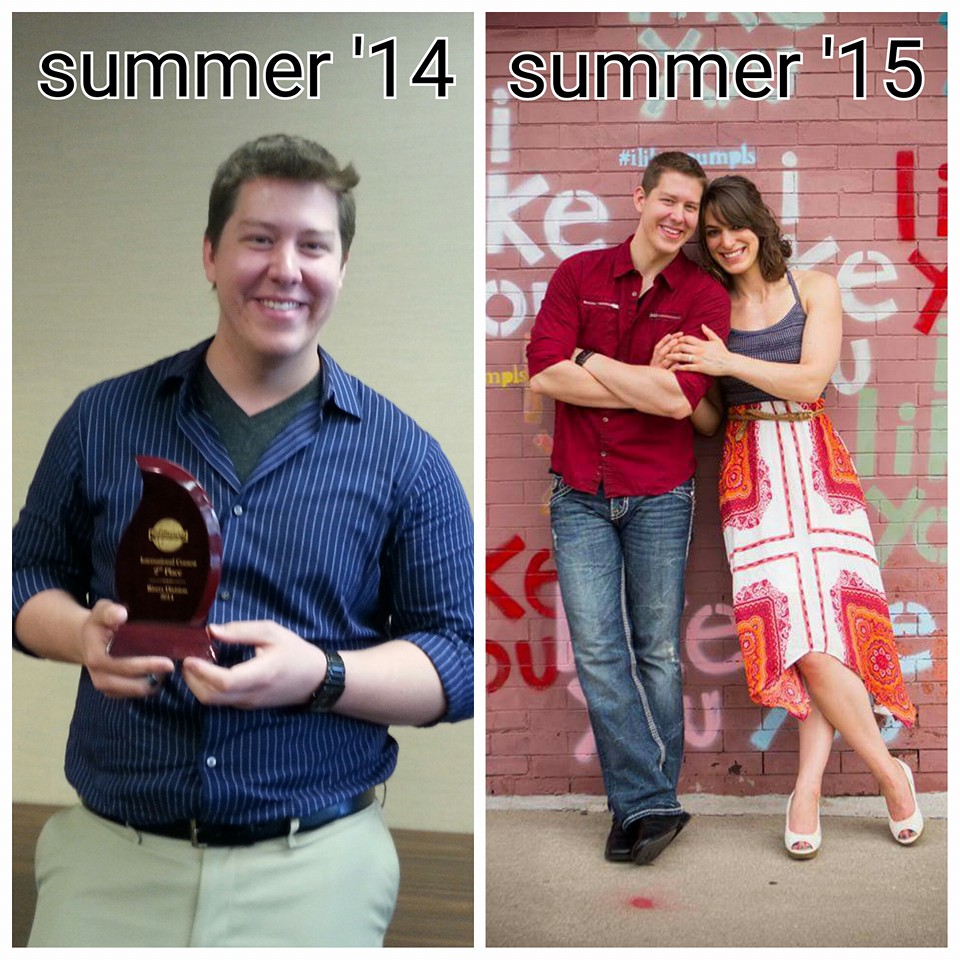
Picture yourself at the most out-of-shape you’ve ever been. I remember gaining 75 pounds after I got back from Africa 6 years ago. A bachelor, full of emotional stress, not sleeping, and eating free burritos every day. Suddenly my body was almost 150% its former size. I felt stupid and unattractive. I felt incapable. Defeated. You know how I felt and you know how hard it is to make the change I needed to make.

I dreaded seeing myself in the mirror, putting on clothes, letting my family see who I’d become, being shirtless in front of my girlfriend. Painful feelings–fear and disgust.

But here’s the thing. I couldn’t just “rip the Band-Aid off.” When I have to tell my landlord I accidentally put a hole in the drywall–that’s a Band-Aid I can rip off. 75 pounds, on the other hand, is not a Band-Aid you can rip off. That’s a giant mountain you have to move.


So I’m 75 pounds heavier than I was just a couple short years before. Feeling ashamed and insecure. I want to be fit, I could be fit, but I’m just not. And I have two choices. I can start my long, hard journey back to a healthier me–or I can avoid dealing with this problem. Tell myself not to worry about it–it’s okay.

Avoiding it means I also get to avoid dealing head on with how I really feel about myself. Avoidance means a lot more time on the couch for me, a lot less time sweating and feeling insecure at the gym in front of a bunch of people who the world tells me are a hell of a lot “sexier” than me. Avoidance tastes more like pizza and less like broccoli. Avoidance is way easier.

But the stressful issue of my weight remains. It’s not going away. And the longer I avoid it, the worse it’s getting.

Dealing head on with the thing I dread is my other option. I can start the journey I know deep down inside I really want to start. I can start making healthier choices in what I eat, how much I exercise, and when I get to sleep.

So I choose to make the change. I tape up a piece of notebook paper in my closet. Every day I weigh myself and mark my new weight on the paper. Then I pull the hanging clothes back in front of my paper because I feel embarrassed and I don’t want my girlfriend to see my struggle.

I lose 5 pounds and I feel excited. Inspired. Then after the weekend I step on the scale and I’ve gained it back plus a little to spare. I feel my heart in my throat. This happens a few times and I give up.

Avoidance is easier.

After a few sad years of feeling ashamed, powerless, and out of control, my girlfriend helped me make a change–just a couple months before we got engaged. We committed with each other to be in this for the long haul. We completely restructured our day to day lives. The dreaded problem become one of our top priorities. We fought it every day. Not sadly or without a little fun and relaxation here or there. We fought it in a positive light, with excitement and ambition. We fought with consistency and dedication. With focus. It became a major priority.

It no longer was a dark cloud always in the back of my mind. It was my challenge. I felt good about how I was dealing with it. Yes, it was still hard and stressful. But I was dealing with it.


Work is really the same way.

Why do heart attacks occur most often on Monday mornings? (It’s true, Google it.) Because we dread going to work. Because there are big, scary, stressful, depressing issues at work. There are the things that cropped up yesterday and there are the things that have been simmering for a long, long time.

Usually when it’s a situation that came out of the blue, you can rip it off like a Band-Aid.

But then there are the underlying realities at work that make our jobs stress us to death. Unrealistic sales goals. An unfair boss. Self-centered co-workers. Irresponsible employees. Our own bad habits. There’s always a mix of these, but usually there’s the big one: When you leave work thinking “If only…”–what’s that “if only?”

Let’s say for example that this is why you dread work these days: “If only my boss would actually listen to me.”

How did we get here? The first time your boss cut you off, you didn’t immediately lose all motivation. So how did it become the big thing you dread about work? I’d argue it’s a mix of two things:

1. It’s happened a lot.

2. It’s become your “mental model.” The way your mind knows and explains how your boss functions at his core.

Sure, it’s your boss’s fault that he keeps talking over you and won’t give you the time of day.

But maybe it’s your “fault” that you’ve let it happen to the point that you think it’s just the way things are, your boss is a jerk, and it’s not going to change.

Notice that this is not a Band-Aid you can rip off. You have so much pent up frustration, and your boss is so entrenched in his habit, that it’s going to be a long, slow, painful, stressful journey to a healthier relationship. You have to retrain the mental model you’ve created for how and why your boss is who you think he is. You have to keep addressing the offense, patiently and positively.

If you start working on it today, and I mean really working on it–making it one of your very top priorities at work–it will slowly get better. More importantly, you’ll feel better–sometimes immediately.

Or you can avoid it. Avoidance is easier.

But it will get worse, and worse, and worse. And one day you’ll suddenly realize, “I hate my job! This is killing me!” And you’ll find yourself completely incapable of dealing with it anymore. And you’ll give up and walk away, battered and bruised.

And then the process will start over with the next “big thing” that goes wrong at your replacement job.

Avoidance or chasing the solution without delay. . . .


What if every morning you felt yourself stressing about work, you asked yourself: “What do I dread about going to work?” And then made that your #1 priority for the day?

We can make a practice–a habit–of immediately dealing head on with the things we dread, or we can let Avoidance rob us of time and happiness and continue in a cycle of failure and broken relationships.

What big thing do you dread? What can you do about it today?


Picture two different worlds a year from today: A world in which you started dealing head on with your big “what if” today, and a world in which you put it off a little longer.
before & after