Noticing this moment

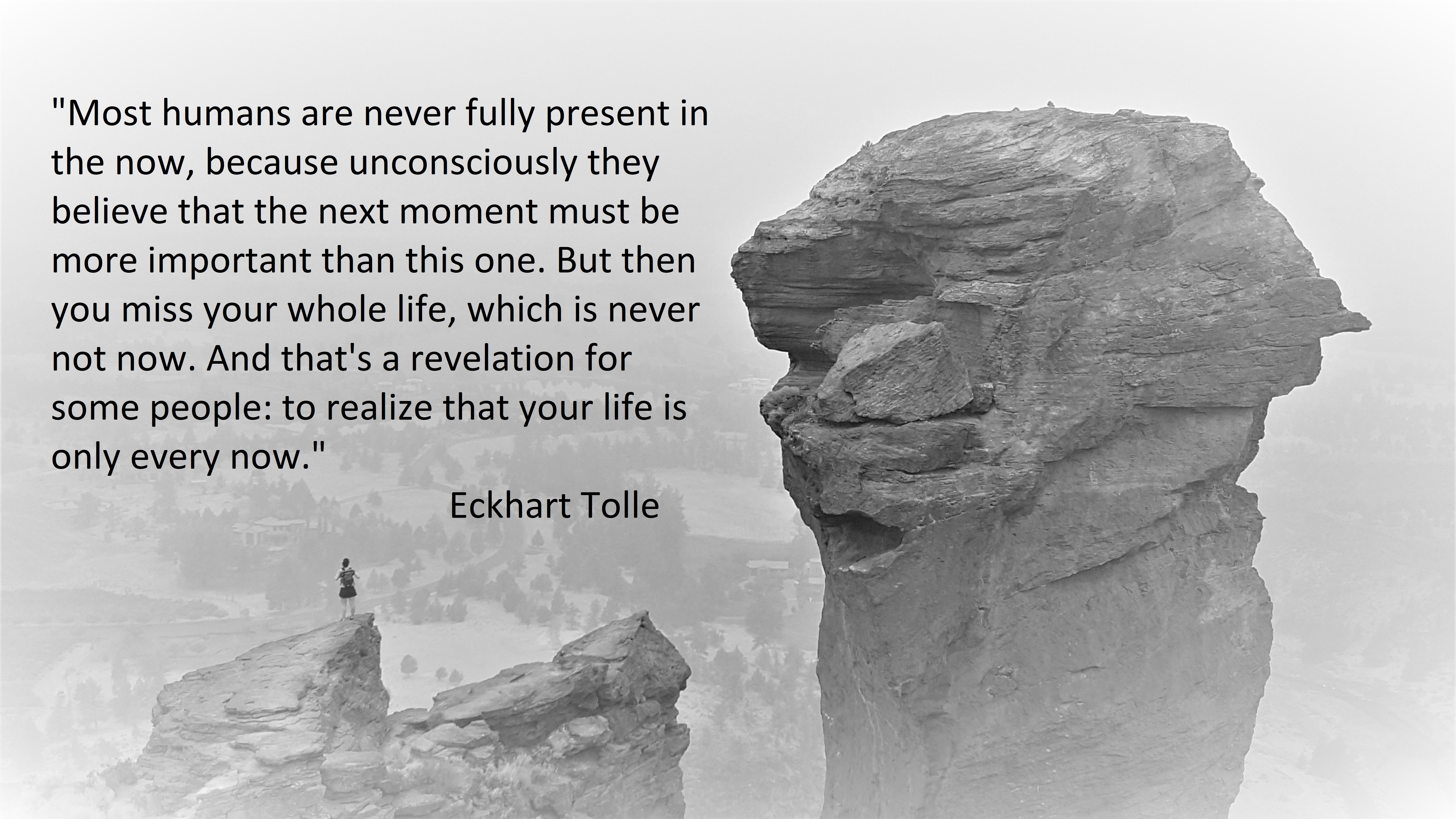
Eckhart Tolle - Most humans are never fully present

I have this compulsive habit of doing stuff on my days off. Lots of stuff. Too much stuff. It’s all stuff I love to do, totally worthwhile. I get really pumped about all these things I can do with all my free time. And then I do as much of the happy stuff as I can. But sometimes the more happy stuff I do, the less happy I feel.

In fact, I often find myself feeling anxious when I have spare time. Anxious that I won’t make the best of it. Anxious that I won’t do enough stuff that needs to be done or that I want to do. Anxious that the time will run out too quickly.

Does that ever happen to you? You get to the end of a weekend or a vacation, only to realize you spent so much time worrying about making the most of it that it slipped right through your fingers?

A couple weeks ago I took an afternoon off. This time I decided on a whim to go for a walk. No running, just a walk. No earbuds. No phone. Just walking and being with myself. Lots of freedom to think and feel. And see things! Things I don’t notice when I’m hurrying. Things like a colorful grasshopper I watched up close for a while.

I felt more peace and happiness in that quiet hour than I do in some entire weekends packed full of stuff to do. These kind of days always end up being my favorite.

I don’t think the problem is the stuff I do, either. One thing isn’t necessarily better or worse than the next. Some people take walks, some people go for runs, some people watch movies, and some people read books–and no matter what the activity, they can feel complete peace and freedom the whole while.

I think the key is incredibly simple. Whatever you are choosing to do, be there.

Be where you are right now. Notice the present moment. Your life in this world at this moment is exploding with color and music and flavor and feeling. But we spend so much time trying to make sure that right now becomes a good memory, that we miss the very thing we wanted the great memory to be about. We spend so much time trying to make this moment great, that we don’t see how incredible this moment already is.

Are you going to miss this moment?

“Most humans are never fully present in the now, because unconsciously they believe that the next moment must be more important than this one. But then you miss your whole life, which is never not now. And that’s a revelation for some people: to realize that your life is only every now.” – Eckhart Tolle

Observation Point, Zion National Park

Last month my wife and her sister and I drove 5000 miles around the western States. We experienced some incredible things. California’s redwoods, the great Grand Canyon, Painted Hills, The Loneliest Road in America, a Ghost Forest off the Oregon coast, and the beautiful paradise of Zion National Park. Oh, and a shocking low flyover by two fighter jets in the middle of nowhere.

There are so many stories to tell. But I want to share just one moment:

20170908_153124 (2)

Our first day in Zion, we hiked four miles of switchbacks, through narrow canyons and along sheer drop offs, all the way up to Observation Point. We could see the tiny paths we’d just come from over two thousand feet below. For a while we just sat at the top and breathed it in. It was so peaceful and beautiful.

Suddenly I found myself looking at life through a different perspective. For an amazing moment I saw all the little daily stresses and problems and dramas for what they were. Distractions. Life was not about who said that thing at work or whether my boss will still like me next year. It wasn’t about how much money I’d saved that month. Life was bigger than that. A lot bigger.

I spend most of the year working. Full time hours, narrowly focused, in a stressful environment. And while I sit at my desk I often find myself dreaming of that little corner of life that we call vacation. That thing that comes around once in a blue moon, where you get to go find a hidden gem somewhere to hang onto in your memory till the next vacation comes around.

But here, after several tough miles in the middle of nowhere (switchbacks put you in touch with your human self), I found myself glancing back at the little corner of life called a job. Sure, my work makes a difference, and jobs are important. But my job is just one tiny piece of this great big world that is mine for the taking. I can walk outside into a beautiful, real world whenever I choose. I can always live in that world I find on vacations. I just don’t always look.

My problems and stresses seemed about as small from the top of that cliff as the tiny trees that dotted the ground below. When I have to walk back down to the bottom and clock back in, those trees might look big again. But they’re not. And sometimes I have to remind myself of that. Sometimes I’ll need to step back and remember the freedom and perspective I found on the top of Observation Point, the freedom to live in a bigger world.

20170909_172121 (2)

20170908_175559 (2)

20170908_141930 (2)

20170908_180115 (2)

20170908_181810 (2)


Priority #1: What do you dread?

I have a natural tendency to ignore stressful things until they go away. (Which they don’t.)

It’s not really a natural tendency. I think I learned it through some very tough young adult years full of confrontations and stalemates. But I want to say it’s “natural” to give myself some credit: It’s not “The New Me.” I’ve been trying to kill it for years. It’s putting up a good fight, though.

I’ll call this tendency “Avoidance.”

A breakthrough in my fight against Avoidance came a couple years back when my insightful manager started using a kind of a mantra with me: “Rip the Band-Aid off!” It was excellent advice. She helped me see things in a new way. Dealing head on with a stressful issue is always, always, always (always) less stressful. It’s like when you were a little kid wiggling at your Band-Aid, tears brimming in your eyes. It hurts less if you just rip it off–no matter how scary.

But dealing with problems is not always as quick and easy as “ripping the Band-Aid off” sounds, so I want to explore this idea a little further and in a bit of a different way.


Sometimes you have an extra difficult choice to make, and it’s one that looks less like a quick fix and more like a long, exhausting journey. And you can choose to avoid it.

Picture yourself at the most out-of-shape you’ve ever been. I remember gaining 75 pounds after I got back from Africa 6 years ago. A bachelor, full of emotional stress, not sleeping, and eating free burritos every day. Suddenly my body was almost 150% its former size. I felt stupid and unattractive. I felt incapable. Defeated. You know how I felt and you know how hard it is to make the change I needed to make.

I dreaded seeing myself in the mirror, putting on clothes, letting my family see who I’d become, being shirtless in front of my girlfriend. Painful feelings–fear and disgust.

But here’s the thing. I couldn’t just “rip the Band-Aid off.” When I have to tell my landlord I accidentally put a hole in the drywall–that’s a Band-Aid I can rip off. 75 pounds, on the other hand, is not a Band-Aid you can rip off. That’s a giant mountain you have to move.


So I’m 75 pounds heavier than I was just a couple short years before. Feeling ashamed and insecure. I want to be fit, I could be fit, but I’m just not. And I have two choices. I can start my long, hard journey back to a healthier me–or I can avoid dealing with this problem. Tell myself not to worry about it–it’s okay.

Avoiding it means I also get to avoid dealing head on with how I really feel about myself. Avoidance means a lot more time on the couch for me, a lot less time sweating and feeling insecure at the gym in front of a bunch of people who the world tells me are a hell of a lot “sexier” than me. Avoidance tastes more like pizza and less like broccoli. Avoidance is way easier.

But the stressful issue of my weight remains. It’s not going away. And the longer I avoid it, the worse it’s getting.

Dealing head on with the thing I dread is my other option. I can start the journey I know deep down inside I really want to start. I can start making healthier choices in what I eat, how much I exercise, and when I get to sleep.

So I choose to make the change. I tape up a piece of notebook paper in my closet. Every day I weigh myself and mark my new weight on the paper. Then I pull the hanging clothes back in front of my paper because I feel embarrassed and I don’t want my girlfriend to see my struggle.

I lose 5 pounds and I feel excited. Inspired. Then after the weekend I step on the scale and I’ve gained it back plus a little to spare. I feel my heart in my throat. This happens a few times and I give up.

Avoidance is easier.

After a few sad years of feeling ashamed, powerless, and out of control, my girlfriend helped me make a change–just a couple months before we got engaged. We committed with each other to be in this for the long haul. We completely restructured our day to day lives. The dreaded problem become one of our top priorities. We fought it every day. Not sadly or without a little fun and relaxation here or there. We fought it in a positive light, with excitement and ambition. We fought with consistency and dedication. With focus. It became a major priority.

It no longer was a dark cloud always in the back of my mind. It was my challenge. I felt good about how I was dealing with it. Yes, it was still hard and stressful. But I was dealing with it.


Work is really the same way.

Why do heart attacks occur most often on Monday mornings? (It’s true, Google it.) Because we dread going to work. Because there are big, scary, stressful, depressing issues at work. There are the things that cropped up yesterday and there are the things that have been simmering for a long, long time.

Usually when it’s a situation that came out of the blue, you can rip it off like a Band-Aid.

But then there are the underlying realities at work that make our jobs stress us to death. Unrealistic sales goals. An unfair boss. Self-centered co-workers. Irresponsible employees. Our own bad habits. There’s always a mix of these, but usually there’s the big one: When you leave work thinking “If only…”–what’s that “if only?”

Let’s say for example that this is why you dread work these days: “If only my boss would actually listen to me.”

How did we get here? The first time your boss cut you off, you didn’t immediately lose all motivation. So how did it become the big thing you dread about work? I’d argue it’s a mix of two things:

1. It’s happened a lot.

2. It’s become your “mental model.” The way your mind knows and explains how your boss functions at his core.

Sure, it’s your boss’s fault that he keeps talking over you and won’t give you the time of day.

But maybe it’s your “fault” that you’ve let it happen to the point that you think it’s just the way things are, your boss is a jerk, and it’s not going to change.

Notice that this is not a Band-Aid you can rip off. You have so much pent up frustration, and your boss is so entrenched in his habit, that it’s going to be a long, slow, painful, stressful journey to a healthier relationship. You have to retrain the mental model you’ve created for how and why your boss is who you think he is. You have to keep addressing the offense, patiently and positively.

If you start working on it today, and I mean really working on it–making it one of your very top priorities at work–it will slowly get better. More importantly, you’ll feel better–sometimes immediately.

Or you can avoid it. Avoidance is easier.

But it will get worse, and worse, and worse. And one day you’ll suddenly realize, “I hate my job! This is killing me!” And you’ll find yourself completely incapable of dealing with it anymore. And you’ll give up and walk away, battered and bruised.

And then the process will start over with the next “big thing” that goes wrong at your replacement job.

Avoidance or chasing the solution without delay. . . .


What if every morning you felt yourself stressing about work, you asked yourself: “What do I dread about going to work?” And then made that your #1 priority for the day?

We can make a practice–a habit–of immediately dealing head on with the things we dread, or we can let Avoidance rob us of time and happiness and continue in a cycle of failure and broken relationships.

What big thing do you dread? What can you do about it today?


Picture two different worlds a year from today: A world in which you started dealing head on with your big “what if” today, and a world in which you put it off a little longer.
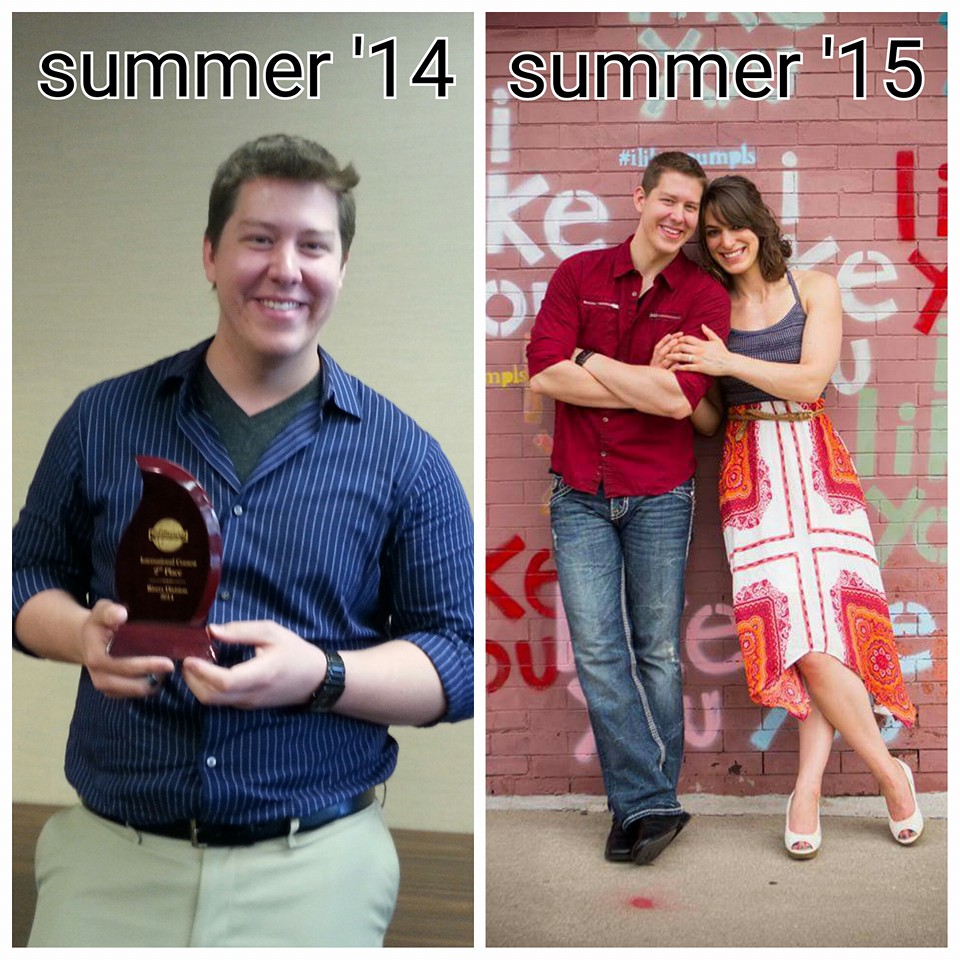
before & after


6 Steps to Stay on Track When You’re Discouraged

20170907_090654

I’ve been struggling with some personal things lately. Just some discouragements I’ve had to work through. Sometimes when you’re discouraged, it’s easy to lose sight of where you want to go–to doubt you’ll get there. And when you’re not fully expecting to get somewhere in the future, it’s not easy to discipline yourself to do the hard work today.

I remember learning this the hard way in my first job. But then I learned how to keep going anyway. Staying diligent through discouragement is hard, but it’s not impossible. Here are 6 steps you can take when you get discouraged. They’ll keep things in perspective and help you stay focused and productive.

     1. Calm your mind.

This is the first step I take in just about any personal challenge. When your mind is fighting (with itself or with outside influences), it is full of adrenaline and doesn’t think clearly or make careful decisions. So the first step to solving a mental and emotional crisis is to just calm down.

I like to go to a quiet place if I can, where I’m not surrounded by people or distractions. Sometimes I close my eyes and just breathe deeply. I let go of some emotions like anger and panic. I relax my mind until I am in a better state to think carefully.

     2. Acknowledge how much you change.

Your mind, heart, temperament, passions–they fluctuate by the day, by the hour, by the minute. Recognizing this helps keep things in perspective. How you feel right now does not have to define who you are. In fact, you are most certainly going to feel differently later.

Part of emotional maturity is being able to make decisions that are no longer based on current moods and feelings. But that takes perspective. It requires really understanding your mind, and appreciating how inconsistent it is, so that you stop basing decisions primarily on your mood. And take hope: You’ll feel better about it later!

     3. Get rid of unnecessary discouragements.

Don’t focus too much on the negative, but do take time to figure out what may be bringing you down. Maybe it’s problems on the job or in your relationship. Maybe you just didn’t get a good night’s sleep. Maybe you’re paying too much attention to one friend’s opinion. Or maybe you’re getting down on yourself for putting on a few extra pounds.

Some of these things will take longer to work on and will never be perfect. Like your relationship, or your career. You can’t just ignore those. But is there anything bringing you down that you can deal with immediately? Could you get more sleep tonight? Could you make healthier choices in your diet? Sometimes just getting rid of or changing your attitude about a little struggle can completely re-energize you.

     4. Ask yourself what you want your future to look like.

After deciding what I need to get rid of, I remind myself of what I’m trying to create. Try asking yourself where you want to be in the future. Be specific. What do you want to be able to do? Who do you want to be serving? How much money do you want to be making? Why? What do you want to be able to provide for family and friends? What experiences do you want out of life?

Dreaming of your future helps put things back in perspective. In fact, it’s one of the best ways to get re-motivated. What you’re doing today is not just for the sake of feeling good today. What you’re doing today is because you want to have something later. Whether you want to travel the world, start a charity, or send your kids to a good school, today’s work is for the sake of that future, not your mood.

     5. Ask yourself how you’ll get where you want to go.

Once you know what you want your future to look like–the place from where you want to be looking back on today–ask yourself two tough questions. They’re easy to answer but the answers demand your hard work and self-discipline:

Will you get there by being disciplined and productive? Maybe, maybe not (though if you do miss the moon you may land in the stars). But will you ever get there without being disciplined and productive? No. Definitely not.

6. Ask for help.

This might be the hardest step to take, but it’s often the most valuable, and sometimes the only one that’ll do it for you. When you’re struggling with discouragement, whether it’s laziness or depression, or just a little mood swing, reaching out for help can be a game-changer.

You can find encouragement, teamwork, accountability, or another form of support. And lots of people are ready and eager to help you. But you have to ask for it. You can ask friends and family. The most helpful teammate I have is my girlfriend, who knows me and cares about me more than anyone else. If you’re a religious person, you can reach out to God. An impressive amount of highly productive and successful people say one of the biggest anchors they have is prayer and church. Wherever you find support, don’t be afraid to go there. And when you feel embarrassed for needing help, that’s probably when you need it most.

These six steps help me a lot. I hope they help you, too!

We’re all in this together. What are some other ways you’ve learned to keep going when you’re discouraged?